




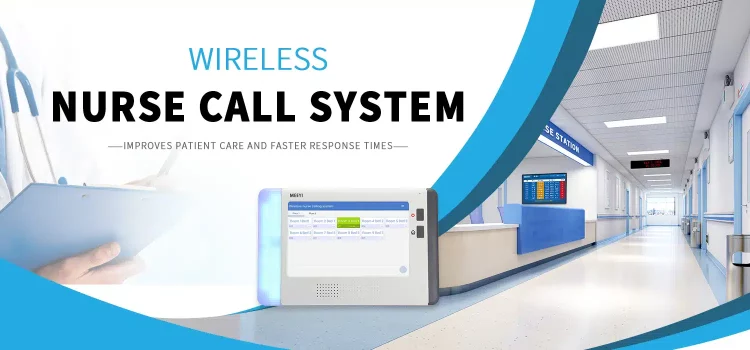
In today’s healthcare landscape, effective communication between patients and healthcare providers is paramount. A key technological advancement that has transformed this communication is the wireless nurse call system for hospitals. These systems enhance the efficiency of care delivery, improve patient safety, and elevate the overall patient experience. This article explores the top features of modern wireless nurse call systems, highlighting their importance in contemporary healthcare settings.
What is a Wireless Nurse Call System?
A wireless nurse call system is a communication network that allows patients to alert nursing staff for assistance without the need for physical wiring. Utilizing wireless technology, these systems enable immediate alerts to be sent from patient devices to staff mobile devices or centralized monitoring stations. This flexibility and mobility have made wireless systems increasingly popular in hospitals and healthcare facilities.
Key Features of Modern Wireless Nurse Call Systems
1. Real-Time Communication
One of the most significant advantages of a wireless nurse call system for hospitals is its ability to provide real-time communication. When a patient presses a call button, the alert is instantly transmitted to the nursing staff. This immediacy ensures that help can be dispatched quickly, which is especially critical in emergency situations.
Benefits:
- Faster response times: Immediate alerts allow nurses to address patient needs without delay.
- Improved patient outcomes: Quick responses can significantly impact patient recovery and satisfaction.
2. Mobile Integration
Modern wireless nurse call systems often integrate with mobile devices, allowing nurses to receive alerts directly on their smartphones or tablets. This feature enhances the mobility of healthcare staff, enabling them to respond to patient needs regardless of their location within the hospital.
Benefits:
- Increased efficiency: Nurses can manage multiple patients more effectively when they receive alerts on the go.
- Better communication: Mobile integration allows for real-time updates and coordination among staff.
3. Customizable Alerts
Wireless nurse call systems offer customizable alert settings. Hospitals can tailor the alerts to fit their specific needs, allowing for differentiation between types of requests. For example, urgent requests can trigger a distinct alert sound or visual indication, ensuring that nurses can prioritize their responses effectively.
Benefits:
- Enhanced prioritization: Custom alerts help staff focus on the most critical patient needs first.
- Improved workflow: By categorizing alerts, nurses can streamline their responses and manage their time better.
4. Integration with Other Technologies
Modern wireless nurse call systems can integrate with various hospital technologies, including electronic health records (EHR), patient monitoring systems, and emergency response systems. This integration provides a holistic view of patient care and enhances communication across departments.
Benefits:
- Comprehensive care: Integrated systems allow healthcare providers to access patient data in real-time, improving care coordination.
- Streamlined processes: Staff can switch seamlessly between different systems, reducing the time spent on administrative tasks.
5. Data Analytics and Reporting
Many wireless nurse call systems come equipped with data analytics features that track call patterns, response times, and staff performance. Hospitals can analyze this data to identify trends, improve processes, and enhance patient care quality.
Benefits:
- Informed decision-making: Data insights can help administrators make strategic decisions about staffing and resource allocation.
- Quality improvement: Analyzing response times and staff performance allows for targeted training and process enhancements.
6. Patient-Centric Features
Modern wireless nurse call systems prioritize patient experience by incorporating features that empower patients. For instance, some systems allow patients to use mobile apps to communicate their needs directly to nursing staff. Others may include visual indicators, such as lights or screens, that show which staff member is responding to their request.
Benefits:
- Empowerment: Patients feel more in control of their care when they can easily communicate their needs.
- Enhanced satisfaction: Improved communication and responsiveness lead to higher patient satisfaction scores.
7. Alarm Management
Effective alarm management is crucial in healthcare settings, where multiple alarms can lead to alarm fatigue among staff. Modern wireless nurse call systems address this issue by allowing for the prioritization and categorization of alarms. Nurses can quickly identify which alarms require immediate attention and which can be addressed later.
Benefits:
- Reduced alarm fatigue: Prioritized alarms decrease the risk of staff becoming desensitized to alerts.
- Improved patient safety: By managing alarms effectively, healthcare facilities can ensure critical alerts are not missed.
8. User-Friendly Interface
A user-friendly interface is essential for any technology used in healthcare. Modern wireless nurse call systems are designed with intuitive interfaces that simplify operation for both patients and staff. This ease of use encourages adoption and ensures that the system is utilized effectively.
Benefits:
- Reduced training time: A simple, intuitive interface means less time spent on training staff.
- Increased utilization: When systems are easy to use, both patients and staff are more likely to engage with them.
9. Intercom Features
Many modern wireless nurse call systems include intercom features that allow for verbal communication between patients and nursing staff. This capability enables nurses to assess patient needs more effectively before arriving at the bedside, saving time and resources.
Benefits:
- Enhanced communication: Intercom features allow for clarification of patient needs, reducing unnecessary visits.
- Improved patient satisfaction: Patients appreciate the ability to communicate directly with staff without waiting for a nurse to arrive.
10. Scalability and Flexibility
As healthcare facilities evolve, the ability to scale and adapt systems is crucial. Modern wireless nurse call systems are designed to be scalable, allowing hospitals to expand or modify their systems as needed. This flexibility ensures that the technology can grow alongside the facility.
Benefits:
- Future-proofing: Scalable systems can accommodate changes in patient population and care delivery models.
- Cost-effectiveness: Hospitals can invest in systems that will meet their current needs while being adaptable for the future.
Conclusion
The importance of a wireless nurse call system for hospitals cannot be overstated. These systems significantly enhance communication, improve patient safety, and elevate the overall patient experience. With features such as real-time communication, mobile integration, customizable alerts, and data analytics, modern wireless nurse call systems are indispensable tools in contemporary healthcare settings. As hospitals continue to adopt these advanced technologies, they can ensure that they are providing the highest quality of care to their patients.