In a spectacle reminiscent of cricketing battles on the subcontinent, New York’s Eisenhower Park played host to a historic clash between archrivals India and Pakistan in the ICC T20 World Cup. The sold-out stadium, packed with fervent fans, bore witness to a thrilling encounter that transcended sport and captured the hearts of cricket enthusiasts worldwide.
Image by: Yandex.com
Unprecedented Gathering in Unfamiliar Terrain
Against the backdrop of a temporary Nassau County International Cricket Stadium, boasting a capacity of 34,000 seats, cricket aficionados from near and far converged in New York to witness the highly anticipated showdown. The event marked a significant departure from traditional cricketing strongholds, bringing the spectacle of the T20 World Cup to uncharted territory.
Marquee Fixture of the Group Stage
Amidst political tensions and security concerns, the clash between India and Pakistan emergedas the highlight of the group stage, symbolizing more than just a sporting contest. The rivalry between the two nations, steeped in history and tradition, captivated audiences and underscored the cultural significance of cricket in the subcontinent and beyond.
Festive Atmosphere Despite Rain Delay
Despite inclement weather causing a delay in the proceedings, the spirits of the fans remained undampened as they embraced the festive atmosphere surrounding the match. Vibrant displays of national pride, colorful jerseys, and spirited chants filled the air, embodying the camaraderie and passion that define cricket’s most storied rivalry.
A Rare Opportunity for Indian Diaspora
For members of the Indian community residing in the United States, the T20 World Cup presented a unique opportunity to witness their cricketing heroes in action firsthand. With the tournament taking place in their adopted homeland, fans reveled in the chance to experience the excitement of live cricket, a departure from relying on online streams to follow the game.
Global Appeal and Understanding
The significance of the India-Pakistan rivalry resonated far beyond the confines of the cricketing world, garnering attention and recognition even among those unfamiliar with the sport. As fans from diverse backgrounds united in their support for their respective teams, the match served as a platform for fostering cultural understanding and appreciation.
Celebrating Diversity and Unity
Against the backdrop of a multicultural and cosmopolitan city like New York, the cricketing clash epitomized the spirit of unity amidst diversity. Traders peddling team jerseys, flags waving proudly, and fans from all walks of life coming together in celebration underscored the unifying power of sport to transcend boundaries and forge connections.
Image by: Yandex.com
Looking Ahead
As the ICC T20 World Cupunfolds across different venues, the clash between India and Pakistan in New York stands as a testament to the global appeal and enduring legacy of cricket. While the outcome of the match may fade into memory, the spirit of camaraderie and sportsmanship exhibited on that historic day will continue to resonate for years to come, serving as a beacon of hope and unity in an increasingly interconnected world.
In a disappointing turn of events for the Dallas Mavericks, they succumbed to a 105-98 defeat at the hands of the Boston Celticsin Game 2 of their NBA Finals matchup. Despite a valiant effort led by Luka Doncic, the Mavericks were unable to overcome a resilient Celtics team, falling into a 2-0 series deficit.
Image by: Yandex.com
Doncic Shines Amidst Defeat
Despite ongoing injury concerns, Luka Doncic showcased his brilliance on the court, delivering an impressive triple-double performance with 32 points, 11 rebounds, and 11 assists. Doncic’s early offensive flurry provided a promising start for the Mavericks, but ultimately, his individual efforts were not enough to secure victory.
Celtics’ Balanced Scoring and Defensive Tenacity
Led by Jrue Holiday’s 26-point contribution, the Celtics demonstrated their depth and cohesion, executing a balanced scoring attack to counter the Mavericks’ offensive onslaught. Additionally, Boston’s staunch defense disrupted Dallas’ rhythm, forcing turnovers and capitalizing on scoring opportunities throughout the game.
Game of Runs and Missed Opportunities
The contest featured several momentum swings, with both teams trading leads and answering each other’s scoring runs. Despite resilient efforts from the Mavericks to cut into the lead, costly turnovers, missed free throws, and defensive lapses proved detrimental to their chances of mounting a comeback.
Image by: Yandex.com
Critical Errors Prove Costly
Dallas’ inability to capitalize on crucial moments, coupled with numerous mistakes, including turnovers and missed free throws, significantly impacted their performance. The absence of consistent contributions from players beyond Doncic underscored the Mavericks’ struggles to maintain momentum and execute effectively on both ends of the floor.
Looking Ahead: Uphill Battle for the Mavericks
As the series shifts to Dallas for Game 3, the Mavericks face an uphill battle to reverse their fortunes and claw their way back into contention. With the Celtics holding a commanding series lead, Dallas must address their shortcomings and regroup to salvage their championship aspirations.
Disappointment and Determination
Despite the disappointment of Game 2’s outcome, the Mavericks remain determined to bounce back and showcase their resilience in the face of adversity. With the magnitude of the challenge ahead, Dallas must rally together, learn from their mistakes, and channel their collective efforts towards a comeback in the series.
Final Thoughts: A Missed Opportunity
The Mavericks’ loss in Game 2 serves as a sobering reminder of the fine margins in playoff basketball, where missed opportunities and critical errors can shape the outcome of a series. As they reflect on their performance, Dallas must harness their disappointment as motivation to elevate their game and seize control of their destiny in the NBA Finals.
The ebb and flow of the ocean’s tides have captivated human imagination for millennia. Beyond their practical implications for navigation and coastal living, tides hold a metaphorical significance, symbolizing the eternal dance of time and nature. Throughout history, civilizations have revered the sea, recognizing its immense power and influence.Ancient cultures often intertwined their understanding of time with the rhythms of the tides, viewing them as cosmic phenomena governed by celestial forces.
Mechanism of Tides
Tides result from the gravitational forces exerted by the moon and, to a lesser extent, the sun, on the Earth’s oceans. As the Earth rotates on its axis, ocean water is pulled towards the celestial bodies, causing the familiar rise and fall of sea levels.
Types of Tides
Tides come in various forms, primarily dictated by the alignment of the sun, moon, and Earth. Spring tides occur during the new and full moons when the gravitational forces of the sun and moon align, resulting in higher high tides and lower low tides. In contrast, neap tides occur during the first and third quarters of the moon, when gravitational forces partially cancel each other out, leading to less extreme tidal fluctuations.
Image by yandex.com
Factors Affecting Tide Patterns
Several factors influence the intensity and timing of tides, including the phases of the moon, solar alignment, and the geography and topography of coastal areas. These variables combine to create complex tidal patterns observed around the world.
Significance of Tides
Tides play a crucial role in shaping coastal ecosystems, influencing everything from the distribution of marine species to nutrient cycling. The regular influx and retreat of seawater provide essential habitats for a diverse array of organisms, from intertidal creatures to migratory birds.
Economic Implications
Beyond their ecological significance, tides have profound economic implications. Coastal communities rely on predictable tidal patterns for activities such as fishing, aquaculture, and shipping. Understanding tides is essential for optimizing resource management and ensuring the sustainability of marine industries.
Cultural and Spiritual Significance
Throughout history, tides have been intertwined with human culture and spirituality. Coastal communities often developed rich folklore and mythologies around the ebb and flow of the sea, attributing divine significance to tidal phenomena. Rituals and traditions centered around tides continue to be observed in many cultures, and environmental challenges, influencing global climate and ecosystems. Ocean exploration encompasses a wide range of disciplines and methodologies, each serving a unique purpose in unraveling the mysteries of the deep.serving as a link between past and present.
Relationship between Tides and Time
The cyclical nature of tides has long been used as a basis for measuring time. Lunar calendar systems, prevalent in many cultures, are often synchronized with the phases of the moon and the corresponding tidal patterns. Additionally, tide clocks have been developed to track the rhythmic rise and fall of sea levels, providing practical utility for coastal communities.
Impact on Human Activities
The influence of tides extends beyond the realm of nature, shaping human activities in coastal regions. Agriculture and farming in coastal areas are often planned around tidal cycles, with farmers utilizing tidal flats for cultivation. Furthermore, tides play a significant role in recreational activities such as surfing, sailing, and beachcombing, attracting enthusiasts from around the world.
Image by yandex.com
Historical Attempts to Control Tides
Throughout history, humans have sought to harness the power of tides for various purposes. Ancient civilizations engineered intricate systems of dams, dikes, and canals to control the flow of seawater, often for agricultural irrigation or land reclamation. While many of these early efforts were rudimentary, they laid the groundwork for modern tidal engineering projects.
Environmental Considerations
In contemporary times, managing tides requires a delicate balance between human needs and environmental preservation. Sustainable coastal management practices aim to minimize the ecological impact of human activities while maximizing the benefits derived from tidal resources. With rising concerns about climate change and sea-level rise, coastal communities must adopt adaptive strategies to mitigate potential risks associated with changing tidal patterns.
Tides are primarily caused by the gravitational pull of the moon and, to a lesser extent, the sun, on the Earth’s oceans. As the Earth rotates, the gravitational forces exerted by these celestial bodies cause ocean water to bulge towards them, resulting in the periodic rise and fall of sea levels.
Why do tides change in height and intensity?
The height and intensity of tides vary depending on several factors, including the alignment of the sun, moon, and Earth, as well as the geography and topography of coastal areas. Spring tides, occurring during the new and full moons, result in higher high tides and lower low tides, while neap tides, occurring during the first and third quarters of the moon, lead to less extreme tidal fluctuations.
How do tides affect marine life?
Tides play a crucial role in shaping coastal ecosystems, influencing the distribution of marine species, nutrient cycling, and habitat availability. Many marine organisms have evolved specific adaptations to cope with the challenges posed by tidal fluctuations, such as tidal migrations and behavioral changes.
Can we predict tides accurately?
Yes, advances in tidal science and technology have enabled accurate predictions of tidal patterns for specific locations and timeframes. Tide tables, based on astronomical calculations and historical data, provide valuable information for coastal navigation, fishing, and other activities dependent on tidal cycles.
Conclusion
In conclusion, the ebb and flow of the ocean’s tides represent a timeless dance that has fascinated humanity for millennia. Beyond their practical implications, tides hold profound ecological, economic, and cultural significance, shaping coastal environments and human activities. As we reflect on the eternal rhythm of the sea, let us strive to preserve and protect these natural wonders for future generations.
In a thrilling display of teamwork and resilience, the Boston Celtics secured a pivotal 105-98 victory over the Dallas Mavericks, extending their lead to 2-0 in the NBA Finals. The Celtics showcased a balanced effort on both offense and defense, thwarting a late rally by the Mavericks to maintain their unbeaten record on home turf.
All-Round Team Effort
The Celtics’ triumphwas a testament to their collective prowess, with contributions coming from multiple players. Led by Jrue Holiday’s 26-point performance, Boston demonstrated their depth and versatility, with key contributions from Jaylen Brown and Jayson Tatum. Despite a challenging shooting night, Tatum’s leadership and playmaking were instrumental in keeping the Celtics’ offense firing on all cylinders.
Image by: Yandex.com
Tatum’s Leadership Shines
Acknowledging Tatum’s pivotal role, Holiday credited the young star for his adeptness in navigating double-teams and making the right plays. Tatum’s resilience and court vision were evident as he orchestrated the Celtics’ offensive sets, enabling his teammates to capitalize on scoring opportunities and maintain momentum throughout the game.
Doncic’s Heroics Not Enough
Despite a stellar triple-double performance by Mavericks’ standout Luka Doncic, the absence of adequate support from his teammates proved detrimental to Dallas’ efforts. Doncic’s valiant display, coupled with contributions from PJ Washington and Kyrie Irving, wasn’t enough to overcome the Celtics’ formidable defense and relentless offensive pressure.
Crucial Factors in Mavericks’ Defeat
Turnovers and missed free throws emerged as decisive factors in the Mavericks’ defeat, with Doncic acknowledging his own shortcomings in these areas. Dallas struggled to capitalize on scoring opportunities and faltered in crucial moments, allowing the Celtics to capitalize on their mistakes and maintain control of the game.
Road to Redemption for Mavericks
As the series shifts to Dallas for Game 3, the pressure mounts for the Mavericks to stage a comeback and defend their home court. With Boston’s unblemished road record in the postseason, Dallas faces an uphill battle, necessitating a concerted effort to elevate their performance and turn the tide in their favor.
Celtics’ Resilience and Determination
Boston’s victory not only underscores their on-court prowess but also highlights their resilience and determination in the face of adversity. Weathering late surges from the Mavericks, the Celtics remained composed and focused, ultimately emerging triumphant and reinforcing their status as formidable contenders for the NBA title.
Image by: Yandex.com
Looking Ahead
As the NBA Finals intensify, both teams brace for a fiercely contested battle with the championship on the line. With momentum firmly on their side, the Boston Celtics aim to capitalize on their commanding lead, while the Dallas Mavericks seek redemption and resurgence as they return to familiar territory. The stage is set for an enthralling showdown as the quest for basketball supremacy reaches its pinnacle.
Mark Patterson is a veteran cricket journalist with over two decades of experience covering the sport globally. He has witnessed numerous India-Pakistan encounters firsthand and brings a unique perspective to this cherished rivalry.
The Undying Rivalry: India vs Pakistan
For die-hard cricket fans, there’s no contest quite like India vs Pakistan. This clash transcends the sport, igniting a passion unmatched by any other rivalry in cricket. Mark Patterson, a seasoned cricket journalist, delves into the reasons why this upcoming T20 World Cup encounter is considered Cricket’s Crown Jewel.
A Historical Legacy
The roots of this rivalry run deep, dating back to the partition of British India in 1947. The political tension between the two nations adds another layer of intensity to the cricketing battles. Every match becomes a symbolic fight for national pride, making victory even sweeter and defeat all the more heartbreaking.
The Passion of Cricket Fans
India and Pakistan boast some of the most passionate cricket fans globally. Stadiums erupt in a cacophony of cheers and chants when these two teams face off. The atmosphere is electric, with fans displaying unwavering support for their team, creating an unforgettable spectacle.
Picture by: Getty Images
More Than Just a Game: National Pride
An India-Pakistan encounter goes beyond just winning or losing a match. It’s about national pride and bragging rights. Fans see these matches as a chance to prove their team’s cricketing superiority on the international stage. The winning team’s supporters erupt in celebration, while the losing side experiences national heartbreak.
The Unpredictable Nature of T20 Cricket
The T20 format adds another layer of intrigue to the India-Pakistan clash. The shorter format often throws up unexpected results, making every ball crucial. This unpredictability keeps fans on the edge of their seats, further amplifying the excitement surrounding the match.
Witnessing History: The 2024 T20 World Cup Clash
The upcoming T20 World Cup match between India and Pakistan, scheduled for June 9th, 2024, promises to be another historic encounter. With both teams boasting exceptional talent, the match is poised to be a nail-biting thriller. This match on American soil adds a new dimension to the rivalry, potentially attracting a whole new generation of cricket fans.
Key Players to Watch (Table):
Player
Team
Why to Watch
Virat Kohli
India
Experienced batsman, known for his aggressive style
Babar Azam
Pakistan
Technically gifted batsman, considered one of the best in the world
Jasprit Bumrah
India
Fast bowler with exceptional pace and accuracy
Shaheen Afridi
Pakistan
Young left-arm pacer known for his swing bowling
The Final Word: A Match Beyond Cricket
The India vs Pakistan clash is more than just a cricket match. It’s a cultural phenomenon that brings people together, ignites emotions, and creates lasting memories. The 2024 T20 World Cup encounter promises to be another chapter in this epic cricketing rivalry, a spectacle no true cricket fan should miss.
Hey everyone, Dr. Sarah Lee here, back again to talk about Covid-19 vaccines. Many of you, like myself, have been diligently keeping up with boosters to stay protected. With news of an FDA update for Fall boosters, I know there might be some questions. Let’s break down what this means for you and your booster schedule.
What’s New with Fall Covid Boosters?
The Food and Drug Administration (FDA) plays a crucial role in ensuring the safety and effectiveness of vaccines in the US. Recently, the FDA released recommendations for the upcoming Fall Covid booster season.
Targeting the Evolving Virus
As you know, viruses like Covid-19 can mutate over time. These mutations can sometimes lead to new variants that may evade the protection offered by earlier vaccines. To address this, scientists continuously monitor circulating variants and adjust vaccine formulations to offer the best possible protection.
The New Target: XBB.1.5
Based on current data, the FDA recommends that Fall 2024 Covid boosters target the XBB.1.5 subvariant of the Omicron variant. This specific strain has become prevalent in recent months, and the updated booster will be designed to provide targeted protection against it.
Who Should Get the Fall Booster?
The Centers for Disease Control and Prevention (CDC) will provide specific guidelines on who should receive the Fall booster. However, generally speaking, Covid-19 boosters are recommended for everyone who has completed their primary vaccination series. This is particularly important for those at higher risk of severe illness, such as older adults and people with underlying health conditions.
While the specific details are still under development, here’s a potential comparison of Fall booster options (compared to previous boosters):
Feature
Fall Booster (Potential)
Previous Boosters
Targeted Variant
XBB.1.5 subvariant of Omicron variant
Earlier variants (may vary)
Composition
Monovalent (targets XBB.1.5 only)
May be bivalent (target multiple variants)
Staying Informed and Getting Vaccinated
With Fall approaching, staying up-to-date on the latest Covid-19 information is important. Keep an eye on the CDC website and other reputable sources for official recommendations regarding the Fall booster. Once available, getting your Fall booster is a crucial step in protecting yourself and your loved ones from Covid-19.
Conclusion
The upcoming Fall Covid booster is a testament to the ongoing efforts of scientists and public health officials to keep us safe. By understanding the updated target variant and staying informed about who needs the booster, we can all play a part in mitigating the spread of Covid-19.
Remember, vaccination remains our most effective tool in the fight against Covid-19. Stay informed, stay safe, and get boosted when it’s your turn!
Sarah Jones is a seasoned business analyst with over 10 years of experience in evaluating and implementing emerging technologies. Her expertise lies in identifying best practices for maximizing ROI within the AI development landscape.
Informative Headings:
AI Development: A Game Changer, But At What Cost?
Unveiling the Hidden Costs of Junior-Led AI Projects
The Impact on Project Timeline and Budget
Mitigating Risks: The Value of Senior Expertise
Building a Sustainable AI Development Strategy
Key Considerations for Business Analysts and Investors
The Cost of Cutting Corners: Unveiling the Hidden Costs of Junior-Led AI Development
In today’s data-driven world, Artificial Intelligence (AI) has become a game-changer across industries. Business analysts and investors are increasingly recognizing the potential of AI to revolutionize processes, enhance efficiency, and unlock new growth opportunities. However, the allure of cutting development costs by relying solely on junior talent can lead to unforeseen roadblocks and hidden expenses. This article delves into the critical, yet often overlooked, costs associated with junior-led AI development, empowering business analysts and investors to make informed decisions.
Unveiling the Hidden Costs of Junior-Led AI Projects (Table 1)
Hidden Cost
Description
Impact
Extended Development Time
Junior developers require more supervision and guidance, leading to longer project timelines.
Increased development costs, missed market windows, and potential loss of competitive advantage.
Code Quality and Maintainability
Less experienced developers might produce code with bugs and inefficiencies.
Higher maintenance costs down the line, difficulty in scaling the AI solution, and potential performance issues.
Data Preprocessing and Feature Engineering
Junior developers might lack the expertise to effectively prepare data for AI models.
Reduced model accuracy and performance, hindering the ROI of the project.
Model Selection and Optimization
Choosing the wrong model or failing to optimize it can significantly impact results.
Inaccurate predictions, wasted resources, and missed opportunities to maximize the potential of the AI solution.
Risk Management and Ethical Considerations
Junior developers might lack the experience to identify and mitigate potential risks associated with AI deployment.
Bias in AI models, security vulnerabilities, and potential legal issues.
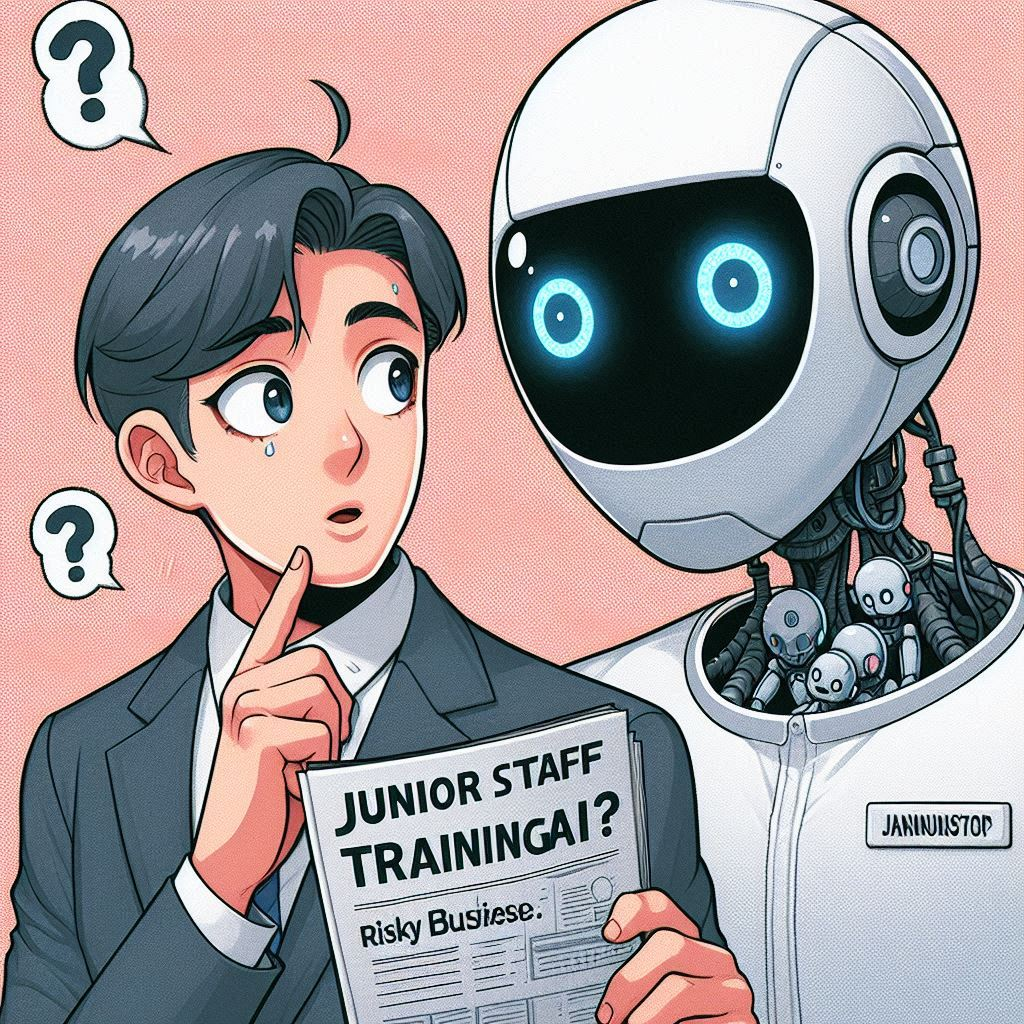
Picture by: Bing Designer
The Impact on Project Timeline and Budget
While focusing solely on junior talent might seem like a cost-saving strategy initially, it can significantly impact both the project timeline and budget. Extended development times due to the need for more supervision and the potential for rework resulting from code quality issues lead to unforeseen expenses. Additionally, the lack of experience in data preparation, model selection, and risk management can translate into inaccurate results and missed opportunities to optimize the AI solution’s performance.
Mitigating Risks: The Value of Senior Expertise
The inclusion of senior developers on an AI project team brings invaluable expertise to the table. Their experience allows them to:
Streamline development processes and identify potential roadblocks early on.
Ensure code quality and establish best practices for maintainability.
Effectively prepare data and select the most suitable AI model for the specific task.
Optimize the model for improved performance and address potential biases.
Identify and mitigate risks associated with AI deployment, ensuring ethical and legal compliance.
Building a Sustainable AI Development Strategy
Building a sustainable AI development strategy requires striking a balance between cost optimization and the expertise necessary for project success. Here are key considerations for business analysts and investors:
Invest in a blended team: Assemble a team that leverages the enthusiasm and learning agility of junior developers while benefiting from the guidance and experience of senior talent.
Prioritize mentorship and training programs: Equip junior developers with the necessary skills to excel in AI development through mentorship programs and targeted training initiatives.
Focus on project scope: Ensure that the assigned tasks for junior developers are well-defined and aligned with their skillset while providing senior oversight on the overall project.
Key Considerations for Business Analysts and Investors
Business analysts play a crucial role in evaluating the feasibility and potential ROI of AI projects. Accurately assessing the development costs requires considering both direct expenses and the hidden costs associated with junior-led development. Investors should look for an AI development strategy that emphasizes a blend of talent, mentorship, and risk management to ensure the long-term success of their investment.
By understanding the hidden costs of junior-led AI development, business analysts and investors can make informed decisions and build sustainable development plans
Conclusion: A Balanced Approach for AI Success
The potential of AI to revolutionize businesses is undeniable. However, achieving success requires a strategic approach that balances cost-efficiency with the expertise required for optimal outcomes. By recognizing the hidden costs associated with junior-led development and implementing a balanced talent strategy, business analysts and investors can build sustainable AI projects that deliver long-term value.
Meet Sarah Jones: Your Guide to Homeownership Bliss
Hi everyone, Sarah Jones here – your friendly neighborhood realtor with over 15 years of experience helping families achieve their dream of homeownership. Throughout my career, I’ve witnessed firsthand the peace of mind that title insurance brings to my clients. Today, I want to bust some common myths surrounding title insurance and show you how it protects your investment without burning a hole in your pocket.
Demystifying Title Insurance: What is it and Why Do You Need It?
Imagine finally finding your perfect home – a place to build memories, raise a family, or simply relax after a long day. You’ve poured your heart and soul into the search, secured the financing, and are about to close the deal. But wait! Have you considered title insurance?
Think of title insurance as a safety net for your homeownership journey. It protects you from unforeseen legal issues that could arise due to defects in the property’s title. These defects can be anything from clerical errors in public records to undiscovered heirs with a claim to the property.
Here’s a table summarizing the most common issues covered by title insurance:
Issue
Description
Forgery or fraud
Someone might have forged documents or made false claims regarding the property’s ownership.
Unpaid taxes or liens
Unpaid property taxes, mortgages, or contractor fees can lead to a lien on the property, potentially jeopardizing your ownership.
Errors in public records
Clerical errors in deeds or other ownership documents can create a cloud on the title.
Unknown heirs
If an heir to the property hasn’t been identified, they could come forward in the future and challenge your ownership.
While these situations may seem unlikely, they can have devastating consequences. Title insurance acts as a shield, covering legal fees and ensuring a clear title to your property.
This image is taken from google.com
Title Insurance: Affordable Peace of Mind
Many first-time homebuyers are hesitant about title insurance due to a misconception that it’s expensive. While the cost varies depending on the property value and location, it’s typically a one-time fee ranging from 0.5% to 1% of the purchase price.
Let’s compare the cost of title insurance to potential financial losses:
Scenario
Potential Cost
Legal fees to defend a title claim
Tens of thousands of dollars
Loss of your homeownership
Priceless
Compared to the potential financial and emotional toll of a title defect, the cost of title insurance is a reasonable investment.
Here are some tips for keeping title insurance costs manageable:
Shop around: Get quotes from multiple title companies before settling on one.
Negotiate: Some closing costs, including title insurance, can be negotiated with the seller.
Consider lender vs. owner’s policy: Lenders typically require a lender’s policy, which protects their interest in the property. However, an owner’s policy offers additional protection for you, the homeowner.
Remember: Peace of mind knowing your home is truly yours is priceless.
Conclusion: Invest in Your Future, Secure Your Title
Title insurance is an essential part of a smart homeownership strategy. It safeguards your investment, protects your dream home, and provides peace of mind for years to come. Don’t let hidden ownership claims disrupt your journey to homeownership bliss. By understanding its value and exploring cost-saving options, you can secure the perfect protection for your new home without breaking the bank.
So, what are you waiting for? Start securing your dream home today!
Hey there! I’m Sarah, a registered dietitian passionate about gut health and mindful eating. I’ve seen the rise of Poppi and its gut health claims, so I decided to dig deeper and see what the experts really have to say.
Headings:
Poppi: The Prebiotic Soda
What are Prebiotics and How Do They Impact Gut Health?
Decoding Poppi’s Ingredients: A Closer Look
Expert Opinions: Does Poppi Live Up to the Hype?
The Bottom Line on Poppi and Gut Health
Alternative Strategies for a Healthy Gut
Conclusion: Fizz or Focus on Food?
Informative Table:
Poppi’s Key Ingredients and Gut Health Impact
Ingredient
Prebiotic Content?
Potential Gut Health Benefits
Apple Cider Vinegar
Limited
May aid digestion (research ongoing)
Agave Inulin
Yes (small amount)
Potential to promote beneficial gut bacteria (needs higher dosage)
Fruit Juice
No
Source of sugar, may not benefit gut health
Poppi: The Prebiotic Soda
Poppi has taken the health food scene by storm, marketing itself as a delicious soda option that also promotes gut health. They achieve this, they claim, by including prebiotics in their recipe.
What are Prebiotics and How Do They Impact Gut Health?
Prebiotics are a type of dietary fiber that act as food for the good bacteria residing in your gut. These good bacteria play a crucial role in digestion, immune function, and overall well-being. When nourished by prebiotics, these good bacteria can thrive, potentially leading to improved gut health.
Picture by: Google Gemini
Decoding Poppi’s Ingredients: A Closer Look
Let’s dissect Poppi’s ingredients to see if they truly deliver on the prebiotic promise:
Apple Cider Vinegar: While some studies suggest apple cider vinegar might aid digestion, its prebiotic content is minimal.
Agave Inulin: This is a form of prebiotic fiber, but a single can of Poppi typically contains only around 2 grams. Research suggests a higher daily intake is needed for potential gut health benefits.
Fruit Juice: This adds sweetness but offers no prebiotic benefits and contributes to the sugar content.
Expert Opinions: Does Poppi Live Up to the Hype?
Registered dietitians and gut health experts are divided on Poppi’s claims. Some acknowledge the presence of prebiotics, but emphasize the limited amount and potential drawbacks from the added sugar.
The Bottom Line on Poppi and Gut Health
While Poppi contains a small amount of prebiotics, it’s unlikely to be a game-changer for your gut health. The sugar content might even negate any potential benefits.
Alternative Strategies for a Healthy Gut
Here are some proven ways to support your gut health:
Eat a fiber-rich diet: Focus on fruits, vegetables, whole grains, and legumes.
Consider fermented foods: Yogurt, kimchi, and kombucha are rich in probiotics.
Manage stress: Chronic stress can negatively impact gut health.
Prioritize sleep: Adequate sleep allows your body, including your gut, to function optimally.
Conclusion: Fizz or Focus on Food?
If you’re looking for a gut-healthy beverage, skip the soda aisle and focus on water, unsweetened tea, or kefir. Building a healthy gut microbiome takes consistent effort, and a balanced diet remains the key.
Remember, Poppi might be a tasty treat, but it’s not a magic bullet for gut health. Make informed choices and prioritize whole foods for lasting benefits!
Hi everyone! I’m Dr. Sarah Jones, a primary care physician with over 10 years of experience. Over the past few years, I’ve witnessed a growing number of patients struggling with Long Covid, a complex condition that lingers after the initial COVID-19 infection. Today, we’ll delve beyond the common symptom of fatigue and explore the surprising breadth of Long Covid’s impact.
Headings:
What is Long Covid?
A Spectrum of Symptoms: Beyond Fatigue
Living with Long Covid: Challenges and Support
When to Seek Help for Long Covid
Hope on the Horizon: Research and Management Approaches
The Road to Recovery: Navigating Long Covid Together
Anxiety, Depression, Balance Problems, Pins and Needles Sensations
Musculoskeletal
Muscle Pain, Joint Pain, Weakness
Digestive
Diarrhea, Abdominal Pain, Nausea
Note: This table is not exhaustive and individuals may experience a combination of these symptoms or others not listed.
What is Long Covid?
Long Covid, also known as Post-Acute Sequelae of COVID-19 (PASC), refers to a constellation of symptoms that persist for weeks or even months after the initial COVID-19 infection. It’s important to understand that Long Covid isn’t simply a prolonged version of the acute illness. While fatigue is a common symptom, Long Covid can manifest in a surprisingly wide range of ways, significantly impacting daily life.
A Spectrum of Symptoms: Beyond Fatigue
The table above provides a snapshot of the diverse symptoms associated with Long Covid. It’s crucial to remember that this list is not exhaustive. Some individuals may experience neurological issues like brain fog, making it difficult to concentrate or remember things. Others might battle persistent respiratory problems, leaving them breathless with even minimal exertion. Additionally, Long Covid can trigger mental health challenges like anxiety and depression, further complicating the recovery process.
Living with Long Covid can be incredibly frustrating and isolating. The unpredictable nature of symptoms and the lack of a quick fix can be emotionally draining. Imagine struggling to perform daily tasks you once took for granted, or experiencing waves of fatigue that disrupt your entire schedule. However, you’re not alone. There’s a growing network of support groups and resources available to help navigate this challenging condition. Consider connecting with online communities or joining in-person support groups specifically designed for Long Covid patients. Sharing your experiences and connecting with others who understand your struggles can be incredibly empowering.
When to Seek Help for Long Covid
If you’re experiencing persistent symptoms following a COVID-19 infection, it’s essential to consult your doctor. Early diagnosis and management are crucial for improving your quality of life. During your appointment, be prepared to discuss the specific symptoms you’re experiencing, their duration, and any potential triggers. Your doctor can perform a physical examination, order relevant tests, and develop a personalized treatment plan to address your specific needs. This plan may include recommendations for managing specific symptoms, such as medication for sleep disturbances or physical therapy for muscle pain. Your doctor can also connect you with relevant support services, such as mental health professionals or rehabilitation specialists.
Hope on the Horizon: Research and Management Approaches
While there’s currently no cure for Long Covid, ongoing research is shedding light on the causes and potential treatment options. Scientists are exploring various avenues, including the lingering effects of the virus itself, the body’s inflammatory response, and potential microvascular damage. This improved understanding is paving the way for the development of more targeted treatment approaches. In the meantime, healthcare professionals are focusing on managing symptoms and improving overall well-being for Long Covid patients. This may involve a combination of approaches, including medications, physical and occupational therapy, cognitive rehabilitation techniques, and lifestyle modifications.
The Road to Recovery: Navigating Long Covid Together
Whether you’re a Long Covid patient, a concerned family member, or a healthcare provider, knowledge is power. By understanding the diverse presentations of Long Covid and the support systems available, we can navigate this journey together. Here’s how each group can contribute to a successful recovery:
For Patients:
Prioritize a Healthy Lifestyle: Focus on a balanced diet rich in fruits, vegetables, and whole grains. Engage in regular exercise (as tolerated) – even gentle walks can make a big difference. Incorporate stress management techniques like meditation or deep breathing exercises into your routine.
Manage Expectations: Recovery from Long Covid can be a slow and gradual process. Celebrate small victories, like completing a task you previously struggled with. Be kind to yourself and prioritize self-compassion throughout this journey.
Advocate for Yourself: Don’t hesitate to seek second opinions or additional consultations if you feel your concerns aren’t being fully addressed. You are your biggest advocate, and it’s important to find a healthcare professional who listens to you and works collaboratively to develop a treatment plan that meets your individual needs.
For Families and Caregivers:
Educate Yourself: Learning about Long Covid can help you better understand your loved one’s experience.
Offer Support and Encouragement: Be a source of strength and encouragement for your loved one. Listen to their concerns, validate their struggles, and celebrate their victories.
Help with Daily Tasks: Offer assistance with household chores, errands, or childcare to help alleviate some of the burden your loved one may be facing.
For Healthcare Providers:
Stay Up-to-Date: The field of Long Covid research is constantly evolving. Regularly update your knowledge on the latest developments in diagnosis, treatment, and management approaches.
Develop a Multidisciplinary Approach: Collaboration with specialists in various fields, such as pulmonology, cardiology, neurology, and mental health, can be crucial for providing comprehensive care to Long Covid patients.
Communicate Effectively: Open and honest communication with patients is essential. Listen attentively to their concerns, explain treatment options clearly, and manage expectations realistically.
Conclusion:
Long Covid can be a complex and daunting condition. However, with proper education, support, and a collaborative approach, we can navigate this challenge towards a brighter future. Remember, you are not alone in this journey. By working together – patients, families, caregivers, and healthcare providers – we can empower individuals with Long Covid to reclaim their health and well-being.