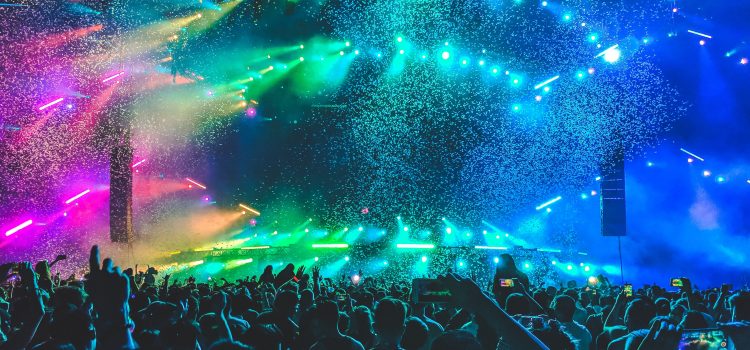
In recent years, there has been growing interest in synesthesia, a phenomenon in which two or more senses are involuntarily linked together. For those who experience synesthesia, sounds may evoke colors, shapes may have flavors, and numbers may have personalities. It’s a fascinating and complex condition that has captivated scientists, artists, and musicians alike.
While synesthesia may be rare, it is not unheard of. Estimates suggest that around 4% of the population may have some form of synesthesia. However, it is perhaps best known in the context of the arts, particularly in music and film. In these mediums, synesthesia can be used to create unique and immersive experiences for audiences.
In music, synesthesia has been used by composers to create works that evoke specific colors or moods. For example, composer Olivier Messiaen famously associated specific chords with colors, and his music has been described as “a kind of synesthetic experience.” Similarly, the composer Alexander Scriabin created a color organ, which he used to accompany his compositions with changing colors.
In film, synesthesia has been used to create visually stunning and emotionally impactful works. One example is the 2010 film “Black Swan,” which uses sound design to create a sense of disorientation and confusion, mirroring the protagonist’s descent into madness. Another example is the 2017 film “Blade Runner 2049,” which features a character with synesthesia who sees sounds as colors. This is reflected in the film’s striking visual style, which features neon hues and saturated colors.
Of course, the use of synesthesia in entertainment is not without controversy. Some argue that it can be a gimmick, used to mask a lack of substance or to distract from weak storytelling. Others argue that it is a valid artistic choice, one that can create unique and memorable experiences for audiences.
Despite these debates, it’s clear that synesthesia has a powerful impact on those who experience it. It can create intense emotional responses, and it has the potential to open up new avenues for artistic expression. As our understanding of synesthesia continues to grow, it’s likely that we will see more and more examples of its use in entertainment.
In conclusion, synesthesia is a fascinating and complex condition that has captured the imagination of artists and audiences alike. Its use in music and film has created some truly memorable experiences, and it has the potential to continue to inspire and challenge us in the years to come.