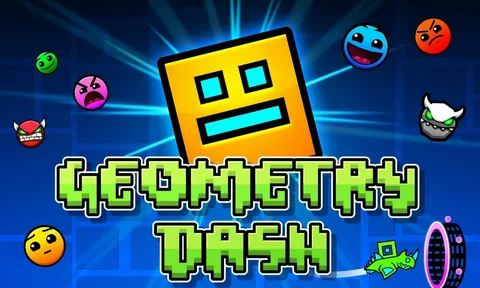
In the vast universe of digital gaming, few titles command the unique blend of devoted fandom and respectful dread quite like Geometry Dash. Mention its name, and you’ll likely conjure images of pulsating neon tracks, a tiny square hero, and the shared, breathless memory of a jump missed by a millisecond.
It’s a classic that transcends its simple premise, offering an experience that is as much about rhythm and flow as it is about raw reflexes. If you’ve ever been curious about a game where minimalism meets monumental challenge, you’re in the right place. Let’s delve into the heart of this rhythmic phenomenon, exploring what makes it tick, how to find your groove, and why that moment of hard-earned success feels so incredibly sweet.
The Pulse of the Geometry Dash: Simplicity Meets Symphony
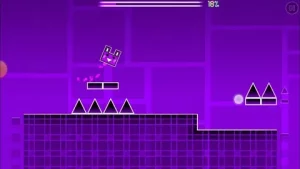
At its core, Geometry Dash is an elegantly straightforward platformer. You guide a geometric icon—a cube, a ship, a ball—through a perilous, music-synced obstacle course with a single primary action: jump. There are no complex combos or intricate control schemes to memorize. Just tap. Yet, within that singular verb lies an ocean of depth.
The genius of the game is in its marriage of action and audio. Each level is not merely set to music; it is built from it. Spikes rise, platforms shift, and gravity flips in direct concert with the beat. This transforms the experience from a simple test of timing into a rhythmic performance. You’re not just avoiding obstacles; you’re dancing with them. The vibrant, minimalist visuals ensure nothing distracts from this core synesthesia of sight and sound, focusing your entire being on the rhythm of survival.
The Gameplay Loop: A Dance of Failure and Triumph
The journey through a Geometry Dash level is a story told in rapid retries. You will fail. You will fail often, sometimes spectacularly. But here lies its second stroke of brilliance: the checkpoint system. Each level is broken into manageable segments, and conquering one grants a safe harbor. This design is a masterclass in positive reinforcement. It turns a daunting marathon into a series of achievable sprints, making “just one more try” an irresistible mantra.
This structure fosters a profound sense of personal progression. You start by clumsily navigating the first few jumps. Through repetition, you begin to internalize the pattern—the way a certain drum hit signals a low ceiling, or how a synth swell cues a double-jump sequence. Muscle memory takes over, and your conscious thought melts away, leaving only you and the rhythm. Finally breaking through a section that once seemed impossible delivers a surge of pure, unfiltered accomplishment that few games can match.
From Novice to Maestro: Practical Tips for Your Geometry Dash
Embarking on this rhythmic quest can be intimidating, but with the right approach, anyone can find their flow and start setting their own high scores.
-
Embrace the Basics: Resist the urge to dive into the demon-rated chaos. Start with the official starter levels. Your goal isn’t just to complete them, but to complete them smoothly. Build a foundation of confidence and fundamental timing.
-
Listen Actively: Your eyes will guide you, but your ears will save you. Let the music be your primary coach. Often, the solution to a tricky sequence isn’t just to react faster, but to listen closer and align your taps precisely with the percussion and melody.
-
Practice with Purpose: Hitting a wall? Use the practice mode. It allows you to place your own checkpoints, letting you drill a specific, troublesome segment repeatedly without the pressure of a full run. Deconstruct the level, learn its parts, then reassemble your perfect performance.
-
The Community Tapestry: Geometry Dash truly shines through its vibrant community. Millions of user-created levels expand the game into an infinite platformer. Here, you’ll find everything from gentle, artistic journeys to brutal, mind-bending challenges. Exploring this content is like having access to a boundless library of new albums and obstacle courses.
-
Make It Your Own: Customize your icon, colors, and trail. This isn’t just cosmetic fluff; it’s a way to personalize your experience and create a visual identity that makes the practice feel fresh and uniquely yours.
-
Pause and Breathe: Fatigue is your enemy. When frustration mounts and your reflexes dull, step away. A short break can reset your mental framework, and you’ll often find that upon returning, a section you struggled with suddenly clicks.
-
Celebrate the Small Wins: Every checkpoint reached, every new personal best, every tricky jump finally nailed is a victory. This game is a marathon of micro-achievements. Acknowledge them. They are the fuel that will propel you to the final goal.
The Final Jump: More Than Just a Game
Geometry Dash is more than a test of skill; it’s a lesson in perseverance, rhythm, and focused growth. It presents a world where challenge and reward are perfectly balanced on the head of a musical beat. Its apparent simplicity is a doorway to a deeply satisfying and complex dance of mind and muscle.
Whether you’re looking for a five-minute test of focus or a months-long quest to conquer a legendary level, the game meets you where you are. It invites you to listen, to learn, to fail, and ultimately, to flow. So take a deep breath, find your rhythm, and launch your icon into the neon-lit unknown. The journey—with all its punishing spikes and triumphant melodies—is uniquely and unforgettably yours.