In the dynamic landscape of global commodities, copper stands as a cornerstone, vital for industries ranging from construction to electronics. As demands soar and supply dynamics fluctuate, the performance of major copper mining companies becomes a focal point for market observers. In this context, the recent production slump faced by the world’s largest copper miner sparks both concern and curiosity. Can this industry giant reverse the downward trend, and what strategies are at play to navigate the complex currents of the copper market?
Understanding the Production Slump
Rolls of copper sheets at the production line in Valjaonica Bakra Sevojno AD copper mill in Sevojno, Serbia, on Wednesday, March,27.2024. Photographer: Oliver Bunic/Bloomberg
Copper mining, inherently tied to geological realities and operational intricacies, often faces periodic downturns. However, when the world’s leading producer experiences a notable slump, it reverberates across markets and industries. Factors contributing to this decline range from operational challenges such as declining ore grades and technical difficulties to broader market influences like price volatility and geopolitical tensions. For the world’s biggest copper miner, such challenges necessitate a strategic reassessment.
Analyzing Operational Strategies
In response to the production slump, the copper mining giant must undertake a comprehensive analysis of its operational strategies. This entails evaluating extraction techniques, optimizing processing methodologies, and enhancing logistical efficiencies. Embracing innovative technologies, such as automation and data analytics, can revolutionize operational efficacy while mitigating risks associated with workforce safety and environmental impact. Moreover, strategic collaborations with technology firms and research institutions can foster groundbreaking advancements in mining practices.
Navigating Market Dynamics
Navigating the turbulent waters of the copper market requires a nuanced understanding of supply and demand dynamics, geopolitical trends, and macroeconomic indicators. By closely monitoring market fluctuations and leveraging predictive analytics, the world’s largest copper miner can preemptively adjust production levels to align with evolving demand patterns. Furthermore, strategic diversification of customer base and product offerings can mitigate risks associated with regional instabilities and sector-specific downturns.
Embracing Sustainability Imperatives
In an era defined by environmental consciousness and corporate responsibility, sustainability emerges as a paramount consideration for copper mining operations. Implementing eco-friendly practices, such as renewable energy adoption and water conservation measures, not only reduces environmental footprint but also enhances operational resilience in the face of regulatory scrutiny and stakeholder activism. Moreover, prioritizing community engagement and fostering inclusive growth can foster long-term social license to operate and bolster corporate reputation.
Exploring Technological Innovations
Technological innovations play a pivotal role in reshaping the landscape of copper mining. From advanced exploration techniques to optimized extraction processes, the integration of cutting-edge technologies holds the key to unlocking new frontiers and enhancing operational efficiencies. By investing in research and development initiatives and fostering partnerships with tech pioneers, the world’s largest copper miner can stay ahead of the curve and leverage innovation as a catalyst for sustained growth and competitive advantage.
Navigating Geopolitical Complexities
Beyond operational and market considerations, navigating geopolitical complexities emerges as a critical determinant of success in the global copper industry. From trade tensions to resource nationalism, geopolitical dynamics exert significant influence on supply chains, pricing mechanisms, and regulatory frameworks. By maintaining a proactive stance and fostering diplomatic engagements, the industry giant can mitigate risks associated with geopolitical uncertainties while capitalizing on emerging opportunities in geopolitically stable regions. This proactive approach enables the world’s largest copper miner to fortify its position as a cornerstone of the global economy while safeguarding against geopoliticalheadwinds.
Comparative Analysis: Competitors’ Performance
Metric
World’s Largest Miner
Competitor A
Competitor B
Production Volume (tons)
X
X-10%
X+5%
Revenue (USD billion)
X
X-2
X+1
Profit Margin
X%
X-3%
X+2%
Market Share (%)
X
X-2%
X+1%
Sustainability Initiatives
Comprehensive
Moderate
Limited
Conclusion
In conclusion, the world’s largest Copper Market confronts a formidable challenge in reversing its production slump amidst a backdrop of evolving market dynamics and sustainability imperatives. By adopting a multifaceted approach that encompasses operational optimization, market intelligence utilization, and sustainability integration, the industry giant can not only navigate the current downturn but emerge stronger and more resilient in the face of future uncertainties. As the global economy continues to rely on copper as a fundamentalbuilding block, the strategic decisions of key industry players will play a pivotal role in shaping market trajectories and driving sustainable growth.
In the ever-evolving landscape of automotive technology, Toyota, a stalwart in the industry, has made a strategic pivot towards small engines in its pursuit of hybridization. This move marks a significant departure from conventional wisdom, where larger engines were often synonymous with power and performance. However, Toyota’s bold decision underscores a paradigm shift towards efficiency and sustainability in the automotive sector. This article delves into Toyota’s rationale behind this shift, analyzes the implications, and presents a comparative assessment of its strategy.
Toyota’s commitment to hybridization is not new; the Japanese automaker has long been a trailblazer in hybrid technology with its iconic Prius lineup. However, the decision to focus on small engines represents a departure from the industry norm. Traditionally, automakers equated larger engines with superior performance, relegating smaller engines to compact cars and economy models. Toyota’s move challenges this perception by leveraging advancements in engine technology and hybridization to maximize efficiency without compromising performance.
Rationale Behind the Shift
Several factors underpin Toyota’s strategic shift towards small engines in its hybrid vehicles. Firstly, stringent emissions regulations and growing environmental consciousness have propelled automakers to prioritize fuel efficiency and reduce carbon emissions. Small engines inherently consume less fuel and emit fewer pollutants, aligning with Toyota’s commitment to sustainability. Moreover, advancements in hybrid technology, such as improved battery efficiency and regenerative braking systems, have bolstered the viability of small engines by supplementing power delivery and enhancing overall performance.
Challenges and Opportunities
Despite the potential benefits, Toyota’s embrace of small engines in the hybrid era is not without challenges. One significant hurdle is consumer perception, as larger engines have long been associated with power and performance. Convincing consumers of the merits of small engines, particularly in larger vehicles or those with performance aspirations, may require a concerted marketing effort. Additionally, technological advancements and infrastructure development are essential to maximize the efficiency and viability of small engines. Collaborations with battery manufacturers, investment in charging infrastructure, and continued research into engine efficiency will be critical in overcoming these challenges.
Future Outlook
Looking ahead, Toyota’s strategic shift towards small engines positions the company as a frontrunner in the transition towards sustainable mobility. As environmental regulations tighten and consumer preferences evolve, the demand for efficient and eco-friendly vehicles is expected to surge. By pioneering hybrid technology and prioritizing small engines, Toyota is well-positioned to capitalize on this trend. Furthermore, the success of Toyota’s strategy may catalyze similar initiatives across the automotive industry, accelerating the adoption of hybrid and electric vehicles globally. In essence, Toyota’s big bet on small engines heralds a new era of automotive innovation, where efficiency, sustainability, and performance converge to shape the future of mobility.
Implications of Toyota’s Strategy
Toyota’s embrace of small engines carries far-reaching implications for the automotive industry. Firstly, it underscores the viability of hybridization as a sustainable alternative to traditional combustion engines. By prioritizing efficiency over size, Toyota sets a precedent for other automakers to reevaluate their approach to engine design and propulsion systems. Furthermore, the proliferation of small engines in hybrid vehicles could reshape consumer preferences, shifting the emphasis from raw power to fuel efficiency and environmental impact.
Comparative Analysis
To assess the effectiveness of Toyota’s strategy, a comparative analysis is imperative. The table below juxtaposes key metrics of Toyota’shybrid vehicles equipped with small engines against conventional vehicles with larger engines:
Metric
Toyota Hybrid (Small Engine)
Conventional Vehicle (Large Engine)
Fuel Efficiency
High
Moderate
Carbon Emissions
Low
High
Performance
Comparable
Superior
Environmental Impact
Reduced
Significant
Cost of Ownership
Lower
Higher
Conclusion
Toyota’s strategic shift towards small engines in the new hybrid era marks a paradigm shift in the automotive industry. By prioritizing efficiency and sustainability, Toyota challenges conventional wisdom and sets a precedent for the future of automotive propulsion. While the implications of this strategy are vast, early indicators suggest a promisingtrajectory towards a greener and more efficient automotive landscape. As other automakers take note, the era of big bets on small engines may very well define the future of mobility.
In recent geopolitical discourse, President Xi Jinping’s assertion regarding the United States’ purported desire for China to attack Taiwan has stirred considerable debate and speculation. This claim, made within the context of escalating tensions between Beijing and Taipei, underscores the intricate web of diplomatic intricacies and power dynamics in the Asia-Pacific region. This article aims to dissect Xi Jinping’s statement, analyze its implications, and provide a comprehensive overview of the situation through the lens of political, economic, and strategic considerations.
Xi Jinping’s declaration comes at a time of heightened sensitivity surrounding the Taiwan issue. The island nation, officially known as the Republic of China, has long been a contentious subject in Sino-American relations. The U.S. has historically maintained a policy of strategic ambiguity concerning Taiwan’s sovereignty, neither explicitly recognizing it as an independent state nor fully adhering to the “One China” principle advocated by Beijing.
Analyzing Xi Jinping’s Allegations
Xi Jinping’s assertion that the United States harbors ulterior motives regarding Taiwan demands a nuanced examination. From Beijing’s perspective, Washington’s increasing engagement with Taipei, including arms sales and diplomatic overtures, could be interpreted as provocative actions aimed at destabilizing the delicate cross-strait equilibrium. Furthermore, China perceives Taiwan as an integral part of its territory, and any attempts to bolster the island’s autonomy are viewed as direct challenges to its sovereignty and territorial integrity.
Implications for Sino-American Relations
Xi Jinping’s claim injects a new layer of complexity into the already strained relationship between China and the United States. Tensions between the two global powers have been escalating on multiple fronts, including trade, technology, and human rights. The Taiwan issue serves as yet another flashpoint, exacerbating mistrust and exacerbating the risk of miscalculation or conflict.
Economic Considerations
Economic interdependence adds another dimension to the Taiwan issue. Both China and the United States are economically intertwined, with significant trade and investment flows between the two countries. Any escalation of tensions over Taiwan could have far-reaching consequences for global markets, disrupting supply chains and investor confidence.
Strategic Implications
From a strategic standpoint, Taiwan holds immense significance for both China and the United States. For China, reunification with Taiwan is seen as a core national interest and a key component of its rejuvenation as a great power. Conversely, the United States views Taiwan as a crucial ally in the Asia-Pacific region and a bulwark against Chinese expansionism. Any military conflict over Taiwan would have profound strategic implications, potentially drawing other regional actors into the fray and destabilizing the entire Asia-Pacific region.
Analysis Table
Factors
China’s Perspective
US Perspective
Taiwan’s Autonomy
Views any attempts to bolster Taiwan’s autonomy as a challenge to its sovereignty.
Supports Taiwan’s autonomy as a bulwark against Chinese expansionism.
Economic Interdependence
Fear of economic repercussions from escalating tensions over Taiwan.
Concerns about disrupting supply chains and investor confidence.
Strategic Significance
Sees Taiwan as a core national interest and a key component of its rejuvenation.
Considers Taiwan a crucial ally in the Asia-Pacific region.
Comparative Table
Aspect
China’s View
US View
Sovereignty
Asserts Taiwan as an integral part of its territory.
Supports Taiwan’s autonomy and self-governance.
Military Relations
Opposes US arms sales and military cooperation with Taiwan.
Commits to defending Taiwan against Chinese aggression.
Diplomatic Engagement
Condemns US diplomatic overtures towards Taiwan.
Advocates for increased diplomatic engagement with Taiwan.
Regional Dynamics and Power Play
Beyond the bilateral dynamics between China and the United States, the Taiwan issue reverberates across the broader Asia-Pacific region. Neighboring countries closely monitor developments surrounding Taiwan, mindful of the potential ripple effects of any escalation. For many regional actors, the prospect of conflict over Taiwan represents a destabilizing force with implications for their own security and strategic interests. Consequently, efforts to mitigate tensions and promote peaceful resolution are not only imperative for China and the United States but also for regional stability as a whole.
The Role of International Law and Norms
In navigating the complexities of the Taiwan issue, the principles of international law and norms play a significant role. While China emphasizes its historical claims and adherence to the “One China” principle, the United States underscores the importance of upholding Taiwan’s democratic values and right to self-determination. As such, the Taiwan issue encapsulates broader debates surrounding sovereignty, territorial integrity, and the rights of states. Any resolution to the Taiwan question must navigate these legal and normativeframeworks while balancing the interests and concerns of all relevant stakeholders.
Conclusion
Xi Jinping’s assertion regarding the United States’ alleged desire for China to attack Taiwan underscores the complex and delicate nature of Sino-American relations. As tensions continue to simmer, the need for diplomatic dialogue and conflict resolution mechanisms becomes increasingly urgent. The Taiwan issue represents a critical test for both Beijingand Washington, with far-reaching implications for regional stability and global geopolitics.
Dr. Amelia Lawrenceis back, and today we’re delving into the world of continuous glucose monitoring (CGM) for type 2 diabetes. CGMs have become a game-changer in diabetes management, but are they right for everyone? Let’s explore the potential benefits and identify who stands to gain the most from this technology.
Understanding CGMs: A Glimpse Inside
CGMs are tiny sensors inserted under the skin that continuously monitor blood sugar levels. They provide real-time data, unlike traditional finger pricks, offering a more comprehensive picture of glucose fluctuations throughout the day.
Here’s a table summarizing the key features of CGMs:
Feature
Description
Sensor
Discreetly inserted under the skin, measures glucose levels in interstitial fluid.
Transmitter
Sends blood sugar data wirelessly to a receiver or smartphone app.
Receiver/App
Displays real-time glucose readings, trends, and alerts.
Alerts
Can warn of highs and lows, helping prevent dangerous blood sugar swings.
The Big Advantage: Who Sees the Most Benefit?
While CGMs offer potential advantages for everyone with type 2 diabetes, certain groups stand to gain the most:
Insulin Users: CGMs provide invaluable data for fine-tuning insulin dosages, leading to improved glycemic control and potentially reducing hypoglycemia episodes.
Highly Variable Blood Sugar: CGMs help identify patterns and triggers for blood sugar spikes and dips, allowing for proactive adjustments to diet, exercise, or medication.
Pregnant Women: CGM use during pregnancy with type 2 diabetes can significantly improve fetal health outcomes by enabling closer monitoring of blood sugar fluctuations.
Motivation Seekers: Real-time glucose data can be a powerful motivator, helping individuals with type 2 diabetes see the immediate impact of lifestyle choices on their blood sugar.
Picture by: Google Gemini
Here’s a table comparing CGM benefits for different groups:
While CGMs offer significant benefits, some factors require consideration:
Cost: CGMs can be expensive, and insurance coverage may vary. Discuss cost implications with your healthcare provider.
Sensor Insertion and Management: Sensor insertion requires a minor procedure, and replacements are needed periodically. Discuss any concerns about sensor use with your doctor.
Data Overload: The constant stream of data can be overwhelming for some. Discuss data management strategies with your healthcare provider.
Working Together: Unveiling the Best Path
The decision to use a CGM should be a collaborative effort between you and your healthcare provider. Consider your specific needs, lifestyle, and preferences. A CGM can be a powerful tool, but it’s not a one-size-fits-all solution.
Remember: Consistent communication with your healthcare provider is crucial for maximizing the benefits of CGM and achieving optimal diabetes management.
Alamo Drafthouse, a beloved dine-in movie theater chain that faced severe setbacks during the pandemic, has found a new lease on life under the ownership of Sony Pictures. Sony announced its acquisition of Alamo Drafthouse, including its 35 locations and the renowned genre film festival, Fantastic Fest. This move marks a significant step for Sony into the realm of experiential entertainment beyond the home.
Background
Founded in Austin, Texas in 1997, Alamo Drafthouse quickly distinguished itself in the competitive landscape of movie theaters by blending the pleasures of good food, quality beer, and curated films all under one roof. Its innovative approach resonated deeply with moviegoers, earning a loyal following across the United States.
The Acquisition
Sony Pictures, known for its vast entertainment offerings, finalized the acquisition of Alamo Drafthouse without disclosing specific financial details. The deal encompasses the integration of Alamo Drafthouse into a newly established division named Sony Pictures Experiences. This strategic move is aligned with Sony’s commitment to engaging entertainment fans through unique and immersive experiences outside their homes.
Strategic Rationale
Image by : Yandex
Ravi Ahuja, President of Sony Pictures, highlighted that the acquisition of Alamo Drafthouse fits perfectly with Sony’s mission to cater to entertainment enthusiasts in distinctive ways. The theater chain’s strong brand identity and dedicated community were significant factors that drew Sony to make this acquisition. The synergy between Sony’s expansive entertainment portfolio and Alamo Drafthouse’s experiential offerings is expected to enhance the overall consumer experience.
Operational Continuity
Under the new ownership, Alamo Drafthouse will continue its operations with its headquarters remaining in Austin, Texas. Michael Kustermann, the current CEO of Alamo Drafthouse, will retain his position, ensuring continuity and leveraging his experience to further enhance the theater chain’s unique appeal.
Impact of the Pandemic
Like many in the entertainment industry, Alamo Drafthouse faced substantial challenges due to pandemic-related restrictions and the delay in film releases. These factors contributed to the company filing for bankruptcy protection in 2021. Despite these setbacks, Alamo Drafthouse managed to navigate through Chapter 11 restructuring with the support of private equity firms Altamont Capital and Fortress Investment.
Future Prospects
With Sony’s backing, Alamo Drafthouse aims to revitalize its business and expand its footprint in the entertainment sector. The acquisition not only secures the future of its existing locations but also opens avenues for potential growth and innovation in the dine-in theater experience.
Conclusion
Sony Pictures’ acquisition of Alamo Drafthouse represents a strategic investment aimed at reinvigorating one of the nation’s most beloved theater chains. By preserving its distinctive offerings and community-driven ethos, Sony seeks to redefine the movie-going experience for audiences across the country. As the entertainment landscape evolves, the partnership between Sony Pictures and Alamo Drafthouse promises to deliver enhanced cinematic experiences that resonate with both film enthusiasts and casual moviegoers alike.
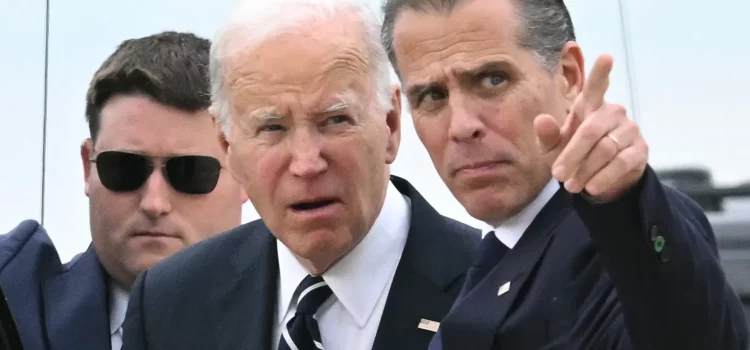
WILMINGTON, Del. (AP) — Hunter Biden, son of President Joe Biden, was convicted on Tuesday of all three felony charges related to the purchase of a revolver in 2018. The charges stemmed from allegations that Hunter Biden lied on a mandatory gun-purchase form by claiming he was not illegally using or addicted to drugs.
Details of the Verdict
Hunter Biden, 54, showed little emotion as the verdict was read in a Wilmington, Delaware courtroom after jury deliberations that lasted three hours over two days. Following the verdict, he embraced his attorneys, smiled faintly, and kissed his wife, Melissa, before leaving the courtroom with her.
President Biden’s Response
President Joe Biden issued a statement shortly after the verdict, affirming his respect for the judicial process and indicating that he would accept the outcome. He also mentioned that Hunter is considering an appeal.
Key Points of the Case
Charges: Hunter Biden was found guilty of lying to a federally licensed gun dealer, falsely claiming on the application that he was not a drug user, and illegally possessing the gun for 11 days.
Key Witnesses: Testimonies from Hunter Biden’s ex-wife and a former girlfriend highlighted the discovery of his drug paraphernalia, including crack pipes.
Sentencing: Hunter Biden faces up to 25 years in prison. However, as a first-time offender, it is unlikely he will receive the maximum sentence. The exact sentencing date has not been set, and it remains uncertain whether he will serve any time behind bars.
Reactions and Implications
Image by : Yandex
The trial and subsequent conviction add to a politically charged year, where both Hunter Biden and presumptive Republican presidential nominee Donald Trump have faced legal challenges. Trump was recently convicted of 34 felony charges related to a hush money payment during his 2016 campaign. While the nature of their cases differs significantly, both have claimed political victimization.
Statements from Key Figures
Defense attorney Abbe Lowell stated that they would continue to vigorously pursue all available legal challenges. Hunter Biden expressed disappointment with the outcome but gratitude for the support of his family and friends.
First Lady Jill Biden attended nearly every day of the trial but missed the announcement of the verdict. She left the courthouse holding hands with Hunter and Melissa Biden before departing in waiting SUVs.
Political Context
President Joe Biden has maintained a cautious distance from the trial, avoiding the federal courtroom and limiting his comments to prevent any perception of interference. Allies of President Biden are concerned about the personal toll this trial and conviction might take on him, given his long-standing worries about Hunter’s health and sobriety.
In contrast to Trump’s claims of a “rigged” verdict in his case, President Biden has accepted the outcome of his son’s trial and indicated that he would not seek to pardon him. Trump’s campaign dismissed Hunter Biden’s verdict as a distraction from what they claim are more significant issues, reiterating unsubstantiated allegations about Joe Biden’s actions during his vice presidency.
Conclusion
In his statement, President Biden expressed pride in his son’s sobriety since 2019 and reaffirmed his and the First Lady’s unwavering support for Hunter. The conviction of Hunter Biden, amidst a politically tumultuous period, underscores the ongoing intersection of legal and political battles in the American landscape.
MORGANTOWN, W.Va. – Yesterday began like any typical sunny, lazy day in the summertime. Show up for work at 9 am, scan your social media pages to check up on your friends, and then begin thinking about an early afternoon exit to walk your dog. At least that was what was going through my mind when my boss, Michael Fragale, walked into the office to tell me that Jerry West had just died.
“Better get to work,” he said.
Talk about having a basketball fly through your front window!
As someone responsible for writing obituaries for the department, oftentimes you have some things prepared in case one of the school’s living legends passes. That was the case with Hot Rod Hundley and Sam Huff, both of whom had been experiencing declining health prior to their deaths.
But Jerry West, the man who always exhibited such energy, vitality, and vigor?
Peter Pans just don’t die, until they do.
A Life Full of Achievements
Image by : Yandex
Where to start with a man who accomplished so much? What do you include and what do you leave out? It’s impossible in a short amount of time to write about all of Jerry West’s achievements from his 86 well-lived years on Earth.
How can you encapsulate all that he has meant to the people of this great state and those who love and adore West Virginia University?
Who do you talk to when he meant so much to everybody?
When you don’t know where you are going, the best place to start is always at the beginning, and for me, the beginning is a file cabinet of interviews that I’ve kept through the years, including some conversations with West. My interviews with him amount to about a half-dozen transcribed telephone calls spanning in length from roughly 20 minutes to a half hour.
Jerry West: The Man Behind the Legend
Some people will give you 10 or 15 minutes of their time before their attention wanes and they want to end the interview and get on to more important things in their day. I’ve had people much farther down the pecking order do that to me. But not Jerry. He was always willing to spend as much time as needed to answer any questions I had, particularly regarding West Virginia, West Virginia University, and his Mountaineer basketball teammates.
I immediately realized the easiest way for me to get interesting responses from Jerry was to get him talking about his dear friend Willie Akers or his fellow classmates.
High School Basketball in West Virginia
I recall once asking him why there were so many outstanding basketball players in the state in the mid-1950s when he was playing at East Bank High. I repeated to him the story the late Eddie Barrett had told me about Virginia Tech coach Chuck Noe looking at the box scores of the high school games in Virginia and the scores being in the 40s and 50s, and then looking at the West Virginia box scores and seeing the scores in the 80s and 90s and Noe deciding that he wanted those West Virginia players.
That naturally got Jerry going.
“We played the Kentucky all-star team, and they were supposed to have the best players in America,” he recalled. “Well, as it turned out we had the better players. We played them twice and beat them twice. It was just a very high-caliber group of guys that we had in West Virginia at that time.
“Style of play was a big part of it,” West explained. “I think coaches were a little bit restrictive than some coaches in certain areas. Most coaches probably inherit their coaching philosophy from coaches that they played for. In that point in time, when I was being recruited for college, Maryland played a very slowed-down game, and I kind of liked that school a little bit, but I just couldn’t go there and play that way. It just didn’t look like it would have been fun for me to play like that.”
The Influence of Coaches
At the time, West Virginia coach Fred Schaus had recently retired from the professional ranks, and with first-time assistant coach George King, they were still young and athletic enough to get out on the floor and give the guys some pointers and tricks that most other coaches couldn’t. King played on an NBAchampionship team with the Syracuse Nationals and West recalled going up against him many times in the old Field House.
“Maybe where I developed a little bit of confidence was because George King was there, and I used to play against him,” he noted. “He was very experienced and very smart, and I found out that I could play against him okay, and that it wasn’t going to be embarrassing for me.
“It was a great environment for any of us who wanted to learn, and more importantly, to engage two people that had played basketball at a different level than any of us had ever played.”
Team Building and Success
Image by : Yandex
Team building was the secret to Schaus’ and King’s successes in coaching, something Jerry clearly learned during his career. The great things West accomplished later with the Los Angeles Lakers, Memphis Grizzlies, Golden State Warriors, and Los Angeles Clippers as an executive had their roots in those well-rounded West Virginia basketball teams of the late 1950s.
Schaus was able to convince Akers that he was better off being a supporting player to Jerry West at West Virginia University than he was being the leading scorer at Virginia Tech or Wake Forest, where some of the other top players in the state at the time were going. Willie had one simple desire when he chose to sign at WVU and play basketball with his buddy Jerry West.
“I wanted to win,” he said.
So, he came to WVU and teamed with Lloyd Sharrar, Bobby Joe Smith, and Jim Ritchie to grab the rebounds and play defense while guards Joedy Gardner, Don Vincent, Bucky Bolyard, Ronnie Retton, and Lee Patrone handled the basketball. It was Jerry who made the tough shots and rose to the occasion whenever it was required.
Every single player on the team would knock over their grandfather to get a loose basketball, that’s how driven they were.
“We were very, very competitive kids,” West recalled. “Just because some of them were fun-loving doesn’t mean they weren’t competitive. They were great people and for someone as quiet and shy and backward as me, it made for a completely different situation in terms of kind of getting out of my shell and making me laugh a little bit because I wasn’t going to change my demeanor. I was much more serious.”
A Serious Competitor
I witnessed that Jerry West seriousness firsthand when I was once asked to be a part of a speaking program that included West in Lewisburg, West Virginia. Jerry was promoting his new book and I had just written “Roll Out the Carpet,” so the idea was for me to go on beforehand and warm up the crowd for a half hour before West took the stage.
After telling some funny Hot Rod Hundley, Wil Robinson, and Levi Phillips stories, it was time for me to exit and head back to the Green Room. It was there where I crossed paths with West, shook his hand, and said hello in a somewhat flippant manner. He looked at me, shook my hand, and nodded, but his attention was already on the task at hand. He had the focus of a prizefighter about to enter the arena, partly because his book was so personal and revealing and he was about to answer some very uncomfortable questions. It was then when I realized that there are common human beings and there are elite human beings.
Jerry West was an elite human being. He was the one person we West Virginians aspired to be, and he understood the heavy responsibilities that entailed.
A Legacy to Learn From
For everyone out there in the Mountain State (and beyond) reading this, do yourself a favor and study Jerry West’s life. Study how he treated others with empathy, dignity, and respect. Study how he always honored his commitments and conducted himself professionally.
The blueprint to a successful life is contained within Jerry West’s personal story – the successes, the failures, the good times, and the heartaches, all wrapped up into one.
He epitomized all the values we West Virginians hold so dear to our hearts, which is why it’s so difficult for us to say goodbye.
Honoring Jerry West
In the meantime, lower your West Virginia flags until after West Virginia Day on June 20th in honor of West’s memory because there will never be another Jerry West – ever.
Conclusion
Jerry West was more than just a basketball legend; he was a symbol of excellence, dedication, and the spirit of West Virginia. His journey from a small-town boy to a global sports icon is a testament to hard work, humility, and an unyielding commitment to excellence. West’s legacy is not just in the records he set or the championships he won, but in the lives he touched and the inspiration he provided to countless individuals.
As we reflect on his life, let us remember the lessons he taught us through his actions both on and off the court. His story is a reminder that greatness is achieved not just through talent, but through perseverance, integrity, and the way we treat others.
In a thrilling game on June 14, 1997, the Chicago Bulls clinched their fifth NBA Championship in seven years. Steve Kerr’s last-second shot ensured a 90-86 victory over the Utah Jazz in Game 6, sealing the series and adding another title to the Bulls’ illustrious era dominated by Michael Jordan and coach Phil Jackson.
Historical Highlights
Early 20th Century Triumphs
Canadian boxing champion Tommy Burns successfully defended his world heavyweight title by knocking out Bill Squires of Australia in the eighth round at Neuilly Bowling Palace in Paris.
1913: James Rowe’s Record-Breaking Belmont Stakes
James Rowe, notable for his back-to-back Belmont Stakes wins as a jockey in 1872-73, set a record as a trainer by securing his eighth Belmont Stakes victory with Prince Eugene.
Mid-20th Century Feats
1935: Jim Braddock’s Unlikely Victory
Jim Braddock, known as the “Cinderella Man,” achieved a 15-round unanimous decision over Max Baer in New York to claim the world heavyweight boxing title.
1953: Ben Hogan’s Fourth U.S. Open Win
Golf legend Ben Hogan won his fourth U.S. Open title with a commanding six-stroke victory over Sam Snead.
1956: Real Madrid Wins First European Cup
Real Madrid triumphed in the inaugural European Cup Final in Paris, with Héctor Rial scoring twice to secure a 4-3 victory over Stade de Reims.
Late 20th Century Achievements
1959: Billy Casper’s U.S. Open Victory
Billy Casper claimed the U.S. Open golf title, outplaying Bob Rosburg.
1971 & 1982: LPGA Championships
Image by : Yandex
Kathy Whitworth won the 1971 LPGA Championship by four strokes over Kathy Ahern. In 1982, Jan Stephenson emerged victorious with a two-stroke win over Joanne Carner.
1989: Detroit Pistons Sweep Lakers
The Detroit Pistons won their first NBA Championship by sweeping the LA Lakers in four games.
1991: The National Ceases Publication
The National, America’s first all-sports daily newspaper, ceased publication.
1992: Sergei Bubka’s Pole Vault Record
Sergei Bubka of Ukraine broke his own world record in the pole vault, reaching 20 feet, one-half inch, setting his 30th world record.
1993: Patty Sheehan’s Third LPGA Championship
Patty Sheehan won her third LPGA Championship, narrowly defeating Lauri Merten by one stroke.
2002: Detroit Red Wings Win Stanley Cup
The Detroit Red Wings captured their 10th Stanley Cup title with a 3-1 victory over the Carolina Hurricanes in Game 5, marking coach Scotty Bowman’s ninth and final 2024 Championship .
Modern Era Highlights
2010: Zenyatta’s Record Win
Thoroughbred racehorse Zenyatta achieved her 17th consecutive win, the longest streak in modern-day unrestricted races, by winning the Vanity Handicap.
2011: Boston Bruins Force Game 7 in Stanley Cup
The Boston Bruins scored four times in a span of just over four minutes in the first period, leading to a 5-2 victory over the Vancouver Canucks and tying the Stanley Cup Final series.
2012: Matt Cain’s Perfect Game
Matt Cain pitched the first perfect game in San Francisco Giants history, striking out 14 batters in a 10-0 win over the Houston Astros.
2014: Netherlands Stuns Spain in World Cup
In a major World Cup upset, the Netherlands defeated Spain 5-1, avenging their loss in the 2010 final.
2014: Los Angeles Kings Win Stanley Cup
The Los Angeles Kings won their second Stanley Cup in three years with a 3-2 victory over the New York Rangers in Game 5.
2016: Cavaliers’ Dynamic Duo Dominates
LeBron James and Kyrie Irving each scored 41 points, leading the Cleveland Cavaliers to a 112-97 win over the Golden State Warriors in Game 5 of the NBA Finals, keeping their Championship hopes alive.
2017: Warriors Claim NBA Title
Image by : Yandex
The Golden State Warriors won their second NBA title in three years by defeating the Cleveland Cavaliers 129-120.
2019: Toronto Raptors’ First NBA Championship
The Toronto Raptors secured their first NBA Championship by beating the Golden State Warriors 114-110.
2021: Novak Đoković’s French Open Victory
Novak Đoković won his 19th Grand Slam title by defeating Stefanos Tsitsipas in a thrilling five-set match at the French Open.
2023: Vegas Golden Knights Win Stanley Cup
The Vegas Golden Knights clinched their first Stanley Cup title with a 9-3 victory over the Florida Panthers in Game 5, marking a historic win in the franchise’s sixth year. Jonathan Marchessault was named MVP.
Conclusion
June 14 marks a significant date in sports history, highlighting a series of memorable and historic achievements across various sports. From the Chicago Bulls’ dramatic NBA Championship victory in 1997 to the Vegas Golden Knights’ first Stanley Cup win in 2023, this date has witnessed a spectrum of remarkable feats.
Legends like Tommy Burns, Ben Hogan, and Novak Đoković have etched their names into the annals of sports with their extraordinary performances, while historic moments such as the Toronto Raptors’ maiden NBA title and Matt Cain’s perfect game continue to inspire future generations. Each event on this date underscores the enduring excitement and unpredictability that make sports a captivating and unifying force worldwide.
Denmark, a land of rich history and stunning landscapes, offers a fascinating journey through time with its array of historical sites. From Viking ruins to royal castles, Denmark’s heritage is a testament to its vibrant past. Join us as we explore some of the most must-visit historical sites in Denmark.
Kronborg Castle
Kronborg Castle, famously known as Elsinore in William Shakespeare’s “Hamlet,” is one of the most significant Renaissance castles in Northern Europe. Located at the narrowest point of the Oresund Sound, this UNESCO World Heritage Site boasts a rich history dating back to the 1420s. Visitors can wander through the grand halls, explore the Royal Apartments, and delve into the castle’s dark dungeons. The castle also hosts the annual Shakespeare Festival, where you can experience performances in an authentic setting.
Viking Ship Museum
Located in Roskilde, the Viking Ship Museum offers an unparalleled look into Denmark’s Viking heritage. The museum houses five original Viking ships recovered from Roskilde Fjord, providing insight into the seafaring capabilities of these ancient warriors.
Interactive exhibits and reconstructed ships offer a hands-on experience, allowing visitors to sail in Viking-style vessels. The museum’s extensive research and preservation efforts make it a crucial center for Viking studies globally.
Image by yandex.com
Jelling Stones
The Jelling Stones, often referred to as Denmark’s birth certificate, are two massive rune stones erected by Viking King Gorm the Old and his son Harald Bluetooth. These stones mark the transition from paganism to Christianity in Denmark around the 10th century.
This UNESCO World Heritage Site includes a museum that provides in-depth information about the Viking Age and the significance of the stones. The nearby Jelling Church and burial mounds further enrich the historical context.
Frederiksborg Castle
Frederiksborg Castle, situated in Hillerud, is the largest Renaissance castle in Scandinavia. Built in the early 17th century by King Christian IV, the castle is surrounded by a beautiful baroque garden and a scenic lake.
The castle now houses the Museum of National History, featuring extensive collections of portraits, historical paintings, and modern art. The Chapel of Orders and the Great Hall are particularly noteworthy for their opulent decorations and historical significance.
Aarhus Old Town
Aarhus Old Town, or Den Gamel By, is an open-air museum in Aarhus that offers a unique walk-through Danish history. The museum consists of 75 historical buildings relocated from various parts of Denmark, representing the urban history of the country from the 16th century to the 1970s.
Visitors can explore period-accurate homes, shops, and workshops, interact with costumed interpreters, and experience everyday life from different historical periods. Special exhibitions and events provide deeper insights into Denmark’s cultural evolution.
Royal Burial Church
Roskilde Cathedral, a UNESCO World Heritage Site, is the burial site for Danish monarchs and a masterpiece of Gothic architecture. The cathedral’s construction began in the 12th century and has been the primary burial site for Danish royalty since the 15th century. Offering a unique cultural experience. Denmark’s rich history is a treasure trove waiting to be discovered by historical travel enthusiasts. From the Viking Age relics in Roskilde to the Renaissance splendor of Frederiksborg Castle The interior of the cathedral is adorned with royal tombs, intricate frescoes, and stunning stained-glass windows. The adjoining museum offers detailed information about the cathedral’s history and its significance in Danish heritage.
Egeskov Castle
Egeskov Castle, located on the island of Funen, is one of Europe’s best-preserved Renaissance water castles. Built in 1554, the castle is surrounded by picturesque gardens, mazes, and a moat, creating a fairytale-like atmosphere. The castle’s interior is equally enchanting, featuring antique furniture, historical exhibits, and a fascinating collection of vintage cars and motorcycles. The surrounding park offers numerous attractions, including treetop walkways and playgrounds, making it a perfect destination for families.
National Museum of Denmark
The National Museum of Denmark in Copenhagen is the country’s largest museum of cultural history. Its extensive collections span from the Stone Age to the modern era, offering a comprehensive overview of Denmark’s history and cultural heritage. Highlights include the prehistoric Sun Chariot, the Gundestrup Cauldron, and the Egtved Girl’s grave. The museum’s interactive exhibits and educational programs make it an engaging experience for visitors of all ages.
Image by yandex.com
Round Tower
The Round Tower (Runde Tarn) in Copenhagen, built in the 17th century by King Christian IV, is the oldest functioning observatory in Europe. This architectural marvel offers a panoramic view of Copenhagen from its unique spiral ramp leading to the top. The tower also hosts exhibitions, concerts, and events throughout the year, providing a blend of historical and cultural experiences. The adjoining Trinitatis Church adds to the site’s historical charm.
Denmark’s Oldest Town
Ribe, founded in the early 8th century, is Denmark’s oldest town and a gem of medieval history. Its well-preserved old town features cobblestone streets, half-timbered houses, and the majestic Ribe Cathedral. The Ribe Viking Center offers an immersive experience of Viking life, with reconstructed buildings, crafts, and activities. The town’s rich history is further showcased in the Ribe Art Museum and the Wadden Sea Centre, highlighting the natural and cultural heritage of the region.
Conclusion
Denmark’s historical sites offer a captivating journey through time, from the Viking Age to the Renaissance and beyond. Each site provides a unique glimpse into the country’s rich heritage and cultural evolution. Whether you’re a history enthusiast, a culture lover, or simply a curious traveler, Denmark’s historical landmarks are sure to leave a lasting impression.
In recent years, geopolitical tensions have surged, and with them, accusations of espionage have become commonplace. One such case garnering international attention is that of Evan Gershkovich, an American journalist facing espionage charges in Russia. This article delves into the background of the case, analyzes the implications of such charges, and provides a comparative assessment of espionage laws and their application in different countries.
The Allegations
Evan Gershkovich, a seasoned journalist known for his coverage of Russian affairs, found himself at the center of a legal storm when Russian authorities accused him of espionage. The charges allege that Gershkovich engaged in activities detrimental to Russian national security, purportedly gathering and disseminating classified information.
Background of Evan Gershkovich
Gershkovich’s career trajectory as a journalist specializing in Russian affairs adds complexity to the case. With a keen interest in Russian politics and society, he has contributed to numerous reputable publications, offering insights into a country often shrouded in mystery for Western audiences. However, his professional pursuits may have inadvertently thrust him into the crosshairs of Russian authorities.
Legal Framework in Russia
Understanding the legal context is crucial in assessing Gershkovich’s case. Russia, like many nations, has stringent laws governing espionage and national security. The Russian government, under various statutes, maintains broad authority to prosecute individuals suspected of compromising state interests through espionage activities.
Implications of Espionage Charges
The ramifications of espionage allegations extend far beyond the individual case. Such charges not only jeopardize the accused’s freedom but also strain diplomatic relations between nations. In the case of Gershkovich, the situation has escalated tensions between the United States and Russia, raising concerns about press freedom and the treatment of foreign journalists.
Comparative Analysis of Espionage Laws
To gain a comprehensive understanding, it is imperative to compare espionage laws across different jurisdictions. While espionage is universally condemned, the interpretation and application of relevant statutes vary significantly. A comparative analysis reveals disparities in legal frameworks, judicial procedures, and the treatment of accused individuals.
International Response and Diplomatic Implications
The espionage allegations against Evan Gershkovich have not occurred in isolation; they are part of a broader pattern of strained relations between Russia and Western nations. The United States, along with its allies, has condemned the charges as baseless and politically motivated, calling for Gershkovich’s immediate release. Diplomatic channels have been utilized to advocate for his rights and press for a fair and transparent trial. However, the Kremlin has remained steadfast in its position, portraying Gershkovich as a threat to national security. This standoff underscores the challenges of navigating diplomatic relations amidst accusations of espionage, where rhetoric often outpaces dialogue and resolution.
Media Freedom and the Role of Journalists
Gershkovich’s case raises profound questions about the state of media freedom in authoritarian regimes and the risks journalists face in their pursuit of truth. In Russia, where independent journalism is increasingly under threat, reporters operate in a precarious environment, navigating censorship, intimidation, and legal reprisals. The targeting of Gershkovichsends a chilling message to journalists, both domestic and foreign, about the dangers of reporting on sensitive issues. As defenders of free speech and accountability, the international community must stand in solidarity with Gershkovich and others like him, advocating for their rights and upholding the fundamental principles of press freedom in the face of adversity.
Jurisdiction
Legal Framework
Judicial Process
Treatment of Accused
Russia
Broad statutes with provisions for harsh penalties
Often opaque proceedings with limited transparency
Harsh treatment, including prolonged detention and restricted access to legal counsel
United States
Defined statutes with emphasis on due process
Open trials with transparency
Protection of rights, including access to legal representation and presumption of innocence
Conclusion
The case of Evan Gershkovich underscores the complexities inherent in espionage allegations and their far-reaching implications. As legal proceedings unfold, the world watches with bated breath, mindful of the broader implications for press freedom, diplomatic relations, and the rule of law. Amidst geopolitical tensions, the pursuit of must be tempered with respect for humanrights and due process, lest the quest for security trample upon the very principles it seeks to protect.