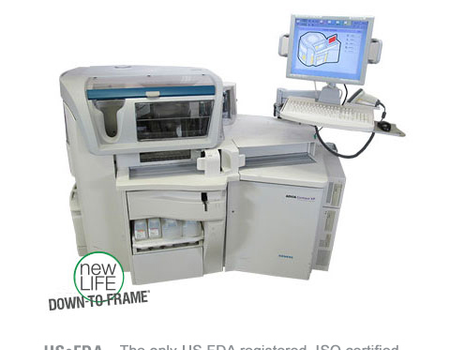
You should choose systems that guarantee precision across a broad test menu. The Advia Centaur XP supports a wide range of immunoassays, including tests for infectious diseases, thyroid function, fertility, tumor markers, and cardiac markers.

It is important to understand that this analyzer is built to meet the needs of high-volume laboratories. It handles both routine and specialized testing with minimal manual input. That means faster operations and fewer errors in result reporting.

The high-throughput capability sets this system apart. It can process up to 240 tests per hour, allowing labs to keep up with large daily workloads. Clinical labs that need speed and reliability often prefer the XP over other mid-range analyzers.

Many facilities report improved turnaround times after switching to this system. Some also observe a noticeable drop in technician fatigue, thanks to the system’s automation features and reduced need for manual intervention.


How Does the Advia Centaur XP Enhance Workflow Efficiency?

You should focus on analyzers that support continuous operations. The Advia Centaur XP includes onboard reagent refrigeration, so labs can store reagents directly in the system. That reduces downtime from frequent loading.

It is important to reduce bottlenecks in busy lab environments. This system allows random-access testing, meaning samples can be run in any order. This is especially helpful when urgent tests need to be prioritized.

The XP model also supports parallel processing of multiple samples. That means it can perform different tests at the same time. Combined with auto-reflex testing and automatic sample reruns, this feature ensures smooth and fast daily workflows.

Reports from diagnostic facilities confirm up to 30% faster processing times compared to older models. The boost in speed helps labs meet tight reporting deadlines, especially during peak hours.

Why Is the Advia Centaur XP Trusted for Consistency?

You should rely on systems that deliver reproducible results, shift after shift. The Advia Centaur XP is known for maintaining precision even during extended hours of operation.

It is important to ensure diagnostic consistency, especially in tests for chronic diseases, fertility tracking, and hormonal disorders. Any variation can impact treatment planning or follow-up schedules.

Labs using the Siemens Advia Centaur CP often upgrade to the XP version because of its improved sample capacity and faster assay processing times. These advantages translate into better clinical performance and fewer result delays.

Medical professionals such as endocrinologists and oncologists trust the XP for its dependable output across a wide test menu. When results matter most, consistency becomes the top priority.

What Advanced Features Set the Advia Centaur XP Apart?

You should consider analyzers that include intelligent safeguards. The XP features built-in error detection, such as automatic flagging of irregular results. This reduces the risk of incorrect diagnoses due to unnoticed data anomalies.

It is important to meet quality assurance goals. The XP uses advanced software algorithms that validate each result against internal quality control standards before release.

Features like intelligent sample management, automatic dilution protocols, and custom alert settings further minimize the chance of technician oversight.

Labs that previously used the Centaur CP often move to the XP for its expanded software controls and custom test programming options. These upgrades offer better flexibility in adjusting workflows and result validation rules.

How Does the Advia Centaur XP Support Specialized Testing?

You should select equipment that handles both routine screenings and high-risk diagnostics. The Advia Centaur XP is equipped for testing hepatitis, HIV, syphilis, and cardiac troponins, among other advanced markers.

It is important to detect life-threatening conditions early. The XP helps with that by delivering fast and accurate results that clinicians can act on with confidence.

For example, in emergency departments where time-sensitive markers like Troponin I are critical, the XP provides rapid turnaround times. That directly impacts treatment response in cardiac care units.

Hospitals using this platform often report shorter diagnostic cycles for patients in critical care. This speed helps teams make timely decisions and improves patient management.

Why Should Medium and Large Labs Choose the Advia Centaur XP?

You should scale your lab with systems that match your operational demands. The Advia Centaur XP is designed for facilities processing hundreds to thousands of samples per day.

It is important to prevent delays during busy shifts. The XP supports bulk reagent loading, continuous sample access, and 24/7 operational readiness. These features allow non-stop testing without interruptions.

Many centralized labs use the XP in tandem with the Centaur CP, using the XP for core testing and the CP for backups or niche assays. This setup keeps operations running smoothly even during maintenance or peak workloads.

Feedback from labs in hospitals, reference centers, and diagnostic networks shows that the XP thrives in high-pressure, fast-paced environments where test accuracy and speed are non-negotiable.

How Does the Advia Centaur XP Improve Patient Outcomes?

You should aim to reduce the time between sample collection and diagnosis. The Advia Centaur XP makes that possible through fast, auto-verified test results.

It is important to minimize delays and diagnostic errors. The XP automatically checks for out-of-range values and flags anything needing review before releasing results. That improves decision-making confidence for clinicians.

Timely, reliable results help healthcare teams adjust treatments sooner, which often leads to better patient recovery rates and fewer hospital readmissions.

Clinicians who rely on the XP system say it helps reduce their workload, thanks to efficient data management and clear flagging of abnormal values that guide faster clinical decisions.

Why Is the Advia Centaur XP a Long-Term Investment?

You should look for equipment that stays useful for years. Siemens supports the Advia Centaur XP with long-term reagent availability, routine software updates, and technical service coverage.

It is important to think beyond the initial purchase. A good analyzer should adapt to new testing needs and evolving industry standards. The XP model continues to receive updates that keep it compliant with global testing protocols.

Labs using the Centaur CP often keep it as a secondary unit while the XP handles primary operations. This approach extends the utility of existing infrastructure without requiring a full overhaul.

In short, the XP offers both immediate performance improvements and lasting operational value, making it a smart choice for labs planning long-term.

Final Thoughts

The Advia Centaur XP gives you the tools to handle high-volume, complex testing with confidence. From advanced automation and consistent results to specialized diagnostics and long-term support, it meets the needs of modern clinical labs.

If your lab requires speed, precision, and scalability, this analyzer is a strong investment for both daily efficiency and future readiness.

Let me know if you’d like this in SEO-optimized HTML format or need a meta title and description to publish on a website.

Also Read this article: https://pressmaverick.com/a-step-by-step-guide-to-finding-the-best-platform-for-content-creators/
Introduction

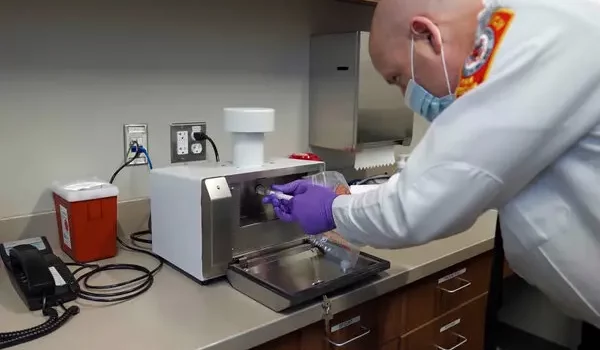
The Immulite 1000 System is a compact and efficient immunoassay analyzer developed by Siemens Healthineers. Designed specifically for small laboratories and specialty clinics, it delivers accurate diagnostic testing without the complexity or footprint of larger analyzers. Labs that need reliable results with minimal space and simplified workflows benefit greatly from this system.

In this article, you’ll discover the system’s core features, its benefits, and how it enhances laboratory efficiency. Whether you operate a small diagnostic lab or a specialty practice, the Immulite 1000 could be the right tool to elevate your testing capabilities.

What Is the Immulite 1000 System?

The Immulite 1000 is a bench-top immunoassay analyzer that uses solid-phase chemiluminescent immunoassay technology. It processes blood and serum samples to detect a wide range of analytes, including hormones, infectious agents, allergens, and tumor markers.

Unlike large-scale systems, the Immulite 1000 is built for low- to mid-volume testing environments. It automates many manual steps and allows clinical labs to run complex immunoassays with minimal hands-on involvement. The result is a streamlined process that saves time and maintains accuracy.

Key Features of the Immulite 1000

Even though the Immulite 1000 is compact, it offers robust features that match the needs of busy labs:

  • Compact Design: Its small footprint allows placement on standard lab counters or benches, saving valuable space.
  • Wide Assay Menu: Access over 100 validated immunoassays, including thyroid function, fertility hormones, cardiac markers, tumor markers, and infectious disease tests.
  • Solid-Phase Technology: The chemiluminescent solid-phase detection provides high sensitivity and reliable accuracy, which is crucial for clinical decisions.
  • Random Access Capability: STAT samples can be loaded at any time without interrupting the current test cycle, ensuring rapid response in urgent cases.
  • Built-In Reagent Storage: Onboard reagent capacity allows continuous operation, reduces setup time, and minimizes manual loading.
  • Automated Calibration and QC: It automates calibration routines and quality control, reducing manual workload and ensuring consistent test performance.

Benefits of the Immulite 1000 System

1. Perfect Fit for Small Labs

The Immulite 1000 is tailored for low- to medium-throughput labs, such as private clinics, satellite labs, or diagnostic practices. It requires no special infrastructure and operates efficiently in limited spaces.

2. Fast and Accurate Results

With a throughput of up to 80 tests per hour, the system ensures results are delivered quickly. This speed supports timely diagnoses, which is especially important in time-sensitive cases like hormone monitoring or infection detection.

3. User-Friendly Interface

The touchscreen interface simplifies operation. Minimal training is needed, allowing lab staff to begin testing quickly and confidently.

4. Low Maintenance Requirements

Fewer moving components mean a lower risk of breakdowns. Weekly maintenance is guided by on-screen prompts, helping staff stay on schedule without guesswork.

5. Cost-Effective Solution

The Immulite 1000 offers high performance at a lower cost than large analyzers. It’s a smart choice for labs with limited budgets that still require high diagnostic quality.

Workflow Integration and Data Management

Effective labs link analyzers to their Laboratory Information System (LIS). The Immulite 1000 supports:

  • LIS Connectivity: Seamless data transfer of test orders and results, cutting transcription errors.
  • CSV Export: Results can be exported to CSV for archiving, research, or quality control review.
  • User Accounts: Multiple user profiles with role‑based access keep data secure and traceable.

This integration streamlines reporting and ensures labs maintain compliance with regulatory standards.

Cost‑Effectiveness for Small Labs

Budget constraints often limit small labs. The Immulite 1000’s low cost of operation addresses this:

  • Few Consumables: Reduced waste lowers ongoing expenses.
  • Minimal Service Needs: Simple maintenance and proven reliability cut service calls.
  • High Assay Throughput: Processing more tests per hour maximizes throughput without extra staff.

By controlling operational costs, labs can offer more services and improve margins.

Real‑World Use Cases

  • Rural Clinics: Offer quick hormone panels and cardiac screening on‑site rather than sending out samples, improving patient care.
  • Specialty Centers: Small cardiology or endocrinology practices can run critical assays during patient visits for immediate treatment decisions.
  • Research Labs: Limited budgets but need a wide assay menu for clinical studies without high‑end instrument costs.

These scenarios demonstrate how the Immulite 1000 enhances testing capability in diverse settings.

Common Applications in Clinical Settings

The Immulite 1000’s flexibility allows it to serve a wide range of medical and veterinary needs:

  • Private Clinics: Doctors rely on it for fast thyroid, fertility, and allergy testing to guide treatment decisions.
  • Small Diagnostic Laboratories: It helps expand test offerings without needing additional space or staffing.
  • Veterinary Laboratories: Animal health professionals use the Immulite 1000 for hormone and disease testing in pets and livestock.
  • Specialty Practices: Endocrinology and reproductive health clinics benefit from targeted assays and fast turnaround times.

How the Immulite 1000 Improves Lab Workflow

Labs often struggle with time-consuming manual processes. The Immulite 1000 helps by automating key functions:

  • Reagent loading, calibration, and quality control happen automatically, saving technician time.
  • The system supports continuous sample loading, which means you can add new samples while others are still running.
  • Minimal manual intervention reduces error risk and allows staff to focus on analyzing results or managing other lab tasks.

According to Siemens Healthineers, the Immulite family of systems consistently delivers accurate results in more than 20,000 labs worldwide. That confidence translates into smoother workflows and higher reliability in daily testing operations.

Technical Specifications at a Glance

Understanding the Immulite 1000’s specs helps labs plan installation and workflows:

Specification Detail
Throughput Up to 120 tests/hour (random or batch)
Time to First Result 42 minutes standard, 15 minutes turbo
Assays On Board Up to 12
Sample Types Serum, plasma
Sample Tubes Indirect tube sampling
Reagent Positions 12
Operating System Microsoft® Windows® 7
Monitor 15‑inch touchscreen
Daily Maintenance 5–10 minutes
Power Requirements 110–120 V, 6 A or 200–240 V, 4 A

These specs show why the Immulite 1000 is ideal for small labs seeking a reliable, fast immunoassay solution.

Final Thoughts

The Immulite 1000 System is a powerful solution for laboratories that need accurate immunoassay testing in a compact format. It bridges the gap between performance and practicality, offering small labs the tools they need to deliver trusted diagnostic insights.

Whether you’re running a clinic, diagnostic lab, or specialty practice, the Immulite 1000 brings speed, reliability, and affordability to your workflow. With its broad menu and automated design, it helps improve patient care while keeping operations efficient and cost-effective.

Frequently Asked Questions (FAQs)

Q1: What tests can the Immulite 1000 run?
It supports a broad test menu including thyroid function tests, fertility markers, tumor markers, cardiac markers, allergies, and infectious diseases.

Q2: How easy is it to use?
The Immulite 1000 is intuitive, featuring an easy-to-navigate interface and automated workflows. Most users can operate it after basic training.

Q3: How fast does it process samples?
It can handle up to 80 tests per hour, depending on the assay type.

Q4: Is it used only in human labs?
No. It is also used in veterinary diagnostics, particularly for endocrine and infectious disease testing in animals.

Q5: What maintenance does it require?
Routine tasks include weekly cleaning and basic checks, which are prompted through the system interface for easy compliance.

Introduction

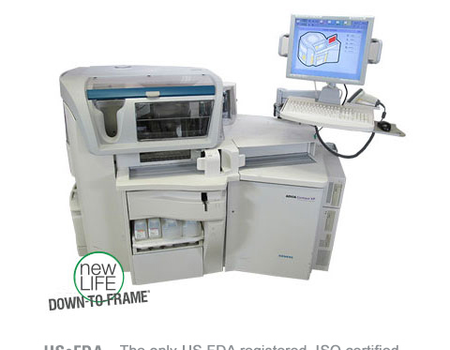
You should recognize how crucial fast and dependable immunoassay testing is for modern diagnostics. It is important to know that the Advia Centaur XP offers reliable high-volume processing with consistent accuracy. Many clinical laboratories depend on this analyzer for daily immunoassay operations. The system’s advanced automation and intelligent workflow support make it a trusted choice for both hospital labs and private diagnostic centers.

You should ask yourself whether your current analyzer delivers the speed and precision needed for today’s complex diagnostic workflows. The Advia Centaur XP improves result turnaround, test throughput, and overall lab productivity. This ensures that healthcare providers can make informed decisions quickly, leading to better patient care outcomes. In an environment where timely diagnostics can affect treatment plans and recovery, the right equipment matters more than ever.

What Features Make the Advia Centaur XP Suitable for Busy Labs?

You should focus on test capacity and menu diversity when choosing immunoassay systems. The Advia Centaur XP supports over 150 test assays, including infectious disease markers, cardiac panels, thyroid tests, fertility assays, and tumor markers. This broad menu makes it possible for labs to handle both routine testing and complex diagnostic cases on a single platform.

It is important to know that the system processes up to 240 tests per hour. The platform also supports continuous sample and reagent loading without interrupting active testing. This means that laboratories can operate without unnecessary pauses, even during peak periods.

A healthcare lab in Spain increased its daily output by 35% after upgrading to the Advia Centaur XP platform. Would your lab benefit from that level of operational control and reliability? Could faster testing and greater test diversity help you meet rising patient demands more effectively?

How Does the Advia Centaur XP Improve Lab Workflow?

You should prioritize ease of use and uninterrupted processing in high-demand labs. The Advia Centaur XP features automatic calibration, integrated onboard quality control, and real-time monitoring systems. These features reduce manual tasks and ensure consistent, reliable results. Operators spend less time troubleshooting and more time focusing on value-added tasks.

It is important to know that the platform includes flexible reagent management, automated maintenance routines, and continuous sample loading. These functions minimize delays and manual handling during high-volume operations. The analyzer’s smart design ensures that samples flow smoothly through the system, reducing risk of errors.

A diagnostic center in Germany reduced result reporting delays by 30% after installing the Advia Centaur XP alongside a Siemens Advia Centaur CP analyzer. You should ask if your lab currently achieves this performance standard. Could automation improvements in your facility translate to better turnaround times for critical tests?

How Does the Advia Centaur XP Compare to Other Immunoassay Systems?

You should evaluate analyzer speed, automation, and system reliability before upgrading. The Advia Centaur XP delivers consistent throughput and a comprehensive test menu, making it ideal for high-volume facilities. Its design meets the demands of busy core labs where both speed and accuracy are non-negotiable.

It is important to know that while smaller platforms manage routine testing, the Siemens Advia Centaur CP system and XP models cover a wider range of diagnostics at faster speeds. This makes both models valuable in large diagnostic networks. Many labs integrate these systems to optimize performance across their testing menus.

A regional hospital network in France paired the Siemens Advia Centaur CP analyzer with the Advia Centaur XP platform. They improved testing efficiency by 50% without hiring additional staff. This type of strategic equipment integration could help your lab achieve similar gains while controlling costs.

What Sample Types Can the Advia Centaur XP Handle?

You should prioritize systems that easily process diverse sample types. The Advia Centaur XP handles serum, plasma, urine, and cerebrospinal fluid samples without operational disruption. This flexibility helps labs manage a wide range of diagnostic needs on one platform, minimizing the need for multiple analyzers.

It is important to know that the system auto-detects and applies appropriate testing protocols for different sample types. This reduces the chance of processing errors and improves result reliability. Many labs report smoother operations and fewer manual adjustments after implementing the Advia Centaur XP.

Facilities often pair the Advia Centaur XP with chemistry systems and a Siemens Advia Centaur CP platform for complete immunoassay and chemistry testing coverage. This approach ensures consistent performance across all test types.

What Role Will the Advia Centaur XP Play in Future Lab Diagnostics?

You should stay informed about lab automation and high-volume testing trends. It is important to know that the Advia Centaur XP platform remains a trusted choice for busy diagnostic labs worldwide. As testing demands continue to grow, scalable systems like this one will be critical in maintaining lab efficiency and accuracy.

A MarketsandMarkets forecast reports that the global immunoassay analyzer market will exceed USD 20 billion by 2028. You should expect analyzers like the Siemens Advia Centaur CP and XP models to stay in demand for scalable, high-throughput testing. Labs that want to stay competitive will continue investing in platforms that offer speed, flexibility, and operational consistency.

Automation, test speed, and intelligent workflow design will shape future platform selection. The Advia Centaur XP already meets these requirements today and will continue to play a key role in modern diagnostics.

Conclusion: Should You Choose the Advia Centaur XP for Your Lab?

You should assess your current test volume, workflow bottlenecks, and result reliability. It is important to know that the Advia Centaur XP improves throughput, reduces delays, and simplifies large-volume operations. In today’s fast-paced diagnostic environment, equipment that supports efficiency without compromising accuracy is essential.

If your lab still depends on older or slower systems, you should consider upgrading to the Advia Centaur XP platform. Many labs also integrate the Siemens Advia Centaur CP system for additional flexibility and specialty immunoassay needs. This combination supports comprehensive testing across multiple departments while maintaining high standards.

Would you continue managing rising test volumes with outdated systems, or adopt a high-performance, reliable analyzer? The Advia Centaur XP delivers the speed, accuracy, and efficiency your clinical laboratory requires.

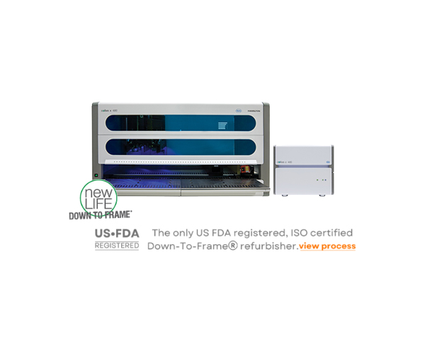
Introduction

Imagine running a lab where every test is accurate, fast, and hassle-free. That’s exactly what the Cobas 4800 delivers. As molecular diagnostics grow more critical in healthcare, labs need instruments that combine speed with precision. The Cobas 4800 PCR testing system, developed by Roche, has emerged as a favorite. In this article, we’ll explore what makes the Cobas 4800 stand out—its high throughput, simple workflow, and reliable results. By the end, you’ll see why many labs choose the Cobas 4800 for their PCR testing needs.

You need precision and efficiency in molecular diagnostics. The Cobas 4800 delivers both. As PCR testing becomes essential in infectious disease screening, oncology, and genetic profiling, clinical laboratories turn to this system for its proven performance and operational consistency.

You must meet diagnostic demands while minimizing manual steps. The Cobas 4800 PCR system integrates automated sample preparation and real-time PCR amplification. That helps your lab reduce variability and increase productivity across various high-volume applications.

High Throughput for Busy Laboratories

When sample volumes surge, labs can’t afford bottlenecks. The Cobas 4800 handles up to 96 samples in a single run. That level of PCR testing capacity helps labs keep pace with demand—whether in outbreak response or routine screenings.

  • Continuous loading: New samples can be added even while the system runs.
  • Walk-away automation: Technicians can start the run and focus on other tasks.
  • Consistent turnaround: Results are ready in as little as two hours.

This efficiency means labs can process more tests per day, reducing backlogs and ensuring patients get answers sooner.

Simple, User-Friendly Workflow

Complex protocols can lead to errors. The Cobas 4800 simplifies every step. From sample preparation to result reporting, the system guides users through a clear, on-screen interface.

  1. Automated extraction: The instrument purifies nucleic acids without manual pipetting.
  2. Ready-to-use reagents: Pre-filled reagent packs eliminate mixing mistakes.
  3. Integrated reporting: Results flow directly into the laboratory information system (LIS).

Lab staff appreciate how the Cobas 4800 minimizes hands-on time. Even technicians new to molecular diagnostics can quickly learn the process, reducing training needs.

Reliable Accuracy and Sensitivity

Accurate detection of genetic material is vital. The Cobas 4800 uses proven real-time PCR chemistry to detect even low levels of target DNA or RNA. This sensitivity helps catch infections early or confirm non-detectable results with confidence. Studies show the system consistently meets or exceeds performance benchmarks set by regulatory bodies.

  • High specificity: Minimizes false positives by targeting unique genetic sequences.
  • Low detection limits: Identifies small quantities of viral or bacterial material.
  • Robust validation: Tested across a range of sample types, from blood to swabs.

With such precision, clinicians can trust the results when making critical treatment decisions.

Seamless Automation and Integration

Modern labs demand instruments that fit smoothly into existing workflows. The Cobas 4800 excels at integration:

  • LIS connectivity: Bi-directional data exchange reduces transcription errors.
  • Modular design: The extraction and amplification units can operate independently.
  • Remote monitoring: Lab managers can check run status from anywhere.

This level of automation not only speeds up testing but also cuts down on repeat runs. When instruments “talk” to each other and to the LIS, labs function more efficiently and cost-effectively.

Cost-Effective Operation

Budget constraints are real, especially in high-volume settings. The Cobas 4800 helps labs manage costs without sacrificing quality.

  • Consumable efficiency: Reagent kits are optimized so fewer leftovers go to waste.
  • Reduced labor costs: Automation frees up skilled staff for more complex tasks.
  • Maintenance simplicity: Scheduled self-checks and easy component swaps keep downtime low.

Over time, these savings add up. By choosing the Cobas 4800, labs can reinvest resources into other critical services or expand testing menus.

What Makes the Cobas 4800 PCR System Efficient?

You require a system that simplifies complex workflows. The Cobas 4800 consists of two main components:

  • Cobas x 480: Automates nucleic acid extraction and PCR setup. 
  • Cobas z 480: Performs real-time PCR analysis and result reporting. 

This integration enables fully automated sample processing—from extraction to detection—reducing the risk of contamination and human error.

A diagnostic facility in Belgium reported a 60% reduction in sample handling time after transitioning to the Cobas 4800. That improvement allowed them to reassign staff to data analysis and quality control.

You maintain testing speed while improving internal resource use.

What Assays Are Supported on the Cobas 4800 Platform?

You want flexibility in test menus. The Cobas 4800 supports a broad range of real-time PCR assays, including

  • Human papillomavirus (HPV) genotyping 
  • Chlamydia trachomatis and Neisseria gonorrhoeae (CT/NG) 
  • BRAF and EGFR mutation detection 
  • Oncology and virology markers 

A molecular diagnostics center in South Korea added five new testing panels within three months of adopting the Cobas 4800, without increasing turnaround time or equipment footprint.

You expand test offerings while using a single integrated platform.

How Accurate Are Results Produced by the Cobas 4800?

You require clinical precision. The Cobas 4800 maintains high analytical sensitivity and specificity using:

  • Dual internal controls per assay 
  • Sealed, closed-tube workflows 
  • Real-time amplification with standardized parameters 

A large study in Germany analyzing over 85,000 samples across four hospitals found >99.2% result consistency when compared to gold-standard diagnostic procedures.

You deliver results with confidence—supporting accurate diagnosis and timely clinical action.

What Is the Throughput Capacity of the Cobas 4800?

You manage rising test volumes. The Cobas 4800 processes up to 94 patient samples per batch, depending on the assay type. First results are available within 3.5 hours, making the system suitable for same-day diagnostic workflows.

A public screening center in Spain used two Cobas 4800 units to process over 350 samples daily during national HPV testing initiatives. They achieved faster report delivery and higher case detection rates without compromising accuracy.

You maintain capacity under pressure while adhering to clinical deadlines.

How Does the Cobas 4800 Support Regulatory Compliance?

You follow strict accreditation guidelines. The Cobas 4800 meets global regulatory requirements and helps maintain audit readiness through:

  • Complete sample traceability 
  • Encrypted operator logs 
  • Built-in quality control protocols 

A certified lab in the UAE passed ISO 15189 and CAP audits using Cobas 4800 logs for compliance verification. Inspectors reported zero deviations related to PCR workflow traceability.

You ensure process integrity and fulfill documentation requirements.

What Are the Operational Advantages for Lab Staff?

You reduce staff burden by simplifying user interaction. The Cobas 4800 provides:

  • Guided touchscreen interface 
  • Scheduled maintenance alerts 
  • Automated reagent and sample ID tracking 

A regional hospital in Kenya trained two new technicians in under five days to operate the system. Both were managing full test runs independently within a week.

You accelerate training and maintain consistent performance across shifts.

What Are the Maintenance and Support Requirements?

You value high uptime. The Cobas 4800 is engineered for continuous use with minimal downtime. It features:

  • Self-diagnostics and calibration monitoring 
  • Easy-access consumables and reagents 
  • Modular component servicing 

A network of clinical labs in Australia maintained >98.4% uptime over a 24-month period across multiple Cobas 4800 installations. They reported fewer than five service interruptions annually.

You minimize disruptions and preserve daily output levels.

How Does It Enhance Patient Outcomes?

You impact clinical care with accurate results. The Cobas 4800 helps improve patient outcomes by detecting infections and mutations earlier and more reliably.

A cervical cancer prevention program in Brazil reported a 17% increase in early-stage HPV detection after deploying the Cobas 4800 for routine screenings. That improvement led to earlier intervention and reduced long-term healthcare costs.

You strengthen care pathways through high-quality diagnostics.

What Should You Consider Before Implementation?

You should assess key factors before investing in a molecular system:

  • Compatibility with your LIS 
  • Vendor training and certification options 
  • Local reagent supply chains 
  • Service agreements and post-installation support 

You must also validate assay performance through in-house trials and review third-party references from similar lab environments.

You ensure long-term operational reliability by evaluating key setup requirements.

Conclusion: Is the Cobas 4800 the Right PCR System for Your Lab?

Yes. The Cobas 4800 delivers automated PCR testing with clinical-grade precision. You meet rising demand. You reduce operator variability. You produce results that support confident medical decisions.

Laboratories worldwide trust the Cobas 4800 PCR system to deliver high-throughput testing with unmatched consistency. You maintain compliance. You enhance efficiency. You support critical patient outcomes every day.